Share this story
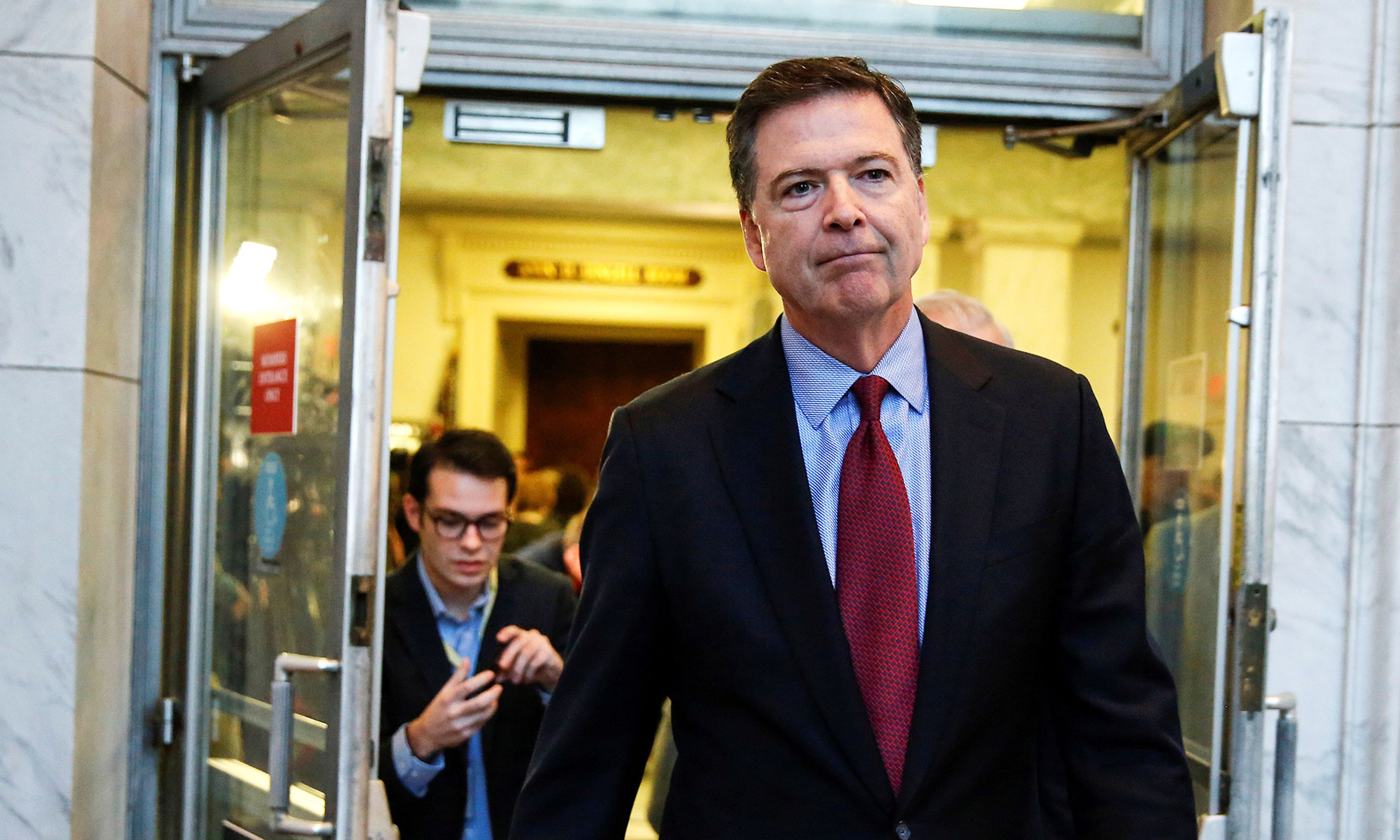
If it’s possible, the Trump Justice Department’s new indictment of former FBI Director James Comey is even more absurd than the previous indictment. That one failed to state a crime. This one fabricates a crime.
The new charges, which have not been released as this is written, reportedly stem from an Instagram post Comey moronically published last year, showing seashells arranged to form the message “86 47.” Even more moronically, the Trump administration interpreted the message as a threat to assassinate the 47th president.
The number “86” is sometimes used in organized crime or gang circles to suggest killing; in more common parlance, however, it connotes getting rid or something, tossing something in the trash, etc. It is not even clear that Comey himself arranged the seashells in his photo, but the claim that, by posting what he’d observed, he was calling for Trump to be assassinated is ridiculous. In the United States, where political speech is protected by the First Amendment, the government may not criminalize the expression of opinion that the incumbent president should be removed or otherwise rejected. (I won’t try to count the number of times Trump did it while Biden was president.)
After uproar generated by the administration, Comey took down the post and publicly asserted that he opposes violence and meant no such suggestion. He also voluntarily submitted to interviews with the Secret Service — which proceeded to drop what should never have been a criminal investigation. There was not a threat of violence against the president, much less an unambiguous call for his assassination. Nor would it be remotely possible, on the known evidence, to prove beyond a reasonable doubt that Comey intended violence.
What Comey did, therefore, does not come close to a threat to kill or harm the president (criminalized by Section 871 of the federal penal code), much less to solicitation of a violent crime (i.e., incitement, under Section 373). This farce, then, is nothing more than a continuation of Trump’s lawfare campaign against a political enemy. It is inconceivable that Comey could be convicted of a crime in these circumstances, but the president’s minions are putting him through the anxiety, expense, and stigma of the judicial process. This includes acting Attorney General Todd Blanche, who is under pressure to prosecute Trump’s enemies and hopes to have the “acting” designation removed from his title.
Of course, when the Justice Department abuses power this way, as it has repeatedly, it shreds its credibility with the courts and undermines the integrity of all its work.
The prior indictment against Comey incoherently alleged that he had provided false statements in Senate testimony in connection with a leak to the media regarding an FBI investigation of Hillary Clinton. (The leaker was Comey’s then-deputy, Andrew McCabe; there was no evidence that Comey knew about the leak until after the resulting story was published.) The indictment was dismissed because Lindsey Halligan, the inexperienced prosecutor Trump and then-AG Pamela Bondi brought in to handle the matter (after the experienced prosecutor had declined to bring the case), had been unlawfully appointed. There were other significant flaws that would likely have caused the case to be dismissed pretrial. Trump later fired Bondi, having grown impatient with her failure to bring viable cases against his nemeses.
The new Comey charges bolster my prior analyses that the president will pardon himself and his underlings before he leaves office.
Trump’s appalling speech at the Ellipse immediately prior to the Capitol riot — which, I repeatedly explained, did not rise to criminally actionable incitement — was nevertheless closer to that line than what Comey is accused of doing. Recall that, after Trump was elected in November 2024, the Biden Justice Department dismissed the January 6 indictment against him (which relied on the Ellipse speech) in deference to long-standing guidance that a sitting president may not be prosecuted. The dismissal, however, was without prejudice to the potential reinstatement of the charges after the president leaves office. To be sure, there would be legal hurdles to reviving the J6 prosecution, but the only way Trump could be sure of avoiding it would be a pardon.
Moreover, in South Florida, the Trump Justice Department is currently investigating various Obama, Trump 1, and Biden officials (including Comey) on the theory that they violated Trump’s civil rights by using their official powers to falsely prosecute him, imprison him, and deny him the right to seek public office. It is a highly unlikely theory of prosecution, to say the least, which is why, to date, no charges have been brought. (The target most often spoken of publicly is former CIA Director John Brennan.) But if we assume for argument’s sake that the Trump DOJ’s investigative theory is colorable, I see no reason why the next Democratic administration would not exploit it: Its Justice Department will investigate and potentially prosecute Trump and any law enforcement officials who abusively pursued baseless investigations and charges against Comey and other Trump enemies. Again, only a preemptive pardon would shield officials from such criminal investigations (although it would not enable them to avoid congressional investigations, civil lawsuits, and being forced to testify in criminal investigations).
Lawfare begets more lawfare. The new Comey charges may be the most grotesque example yet.

About the Author
Andrew C. McCarthy is a senior fellow at National Review Institute, an NR contributing editor, and author of Ball of Collusion: The Plot to Rig an Election and Destroy a Presidency.
Featured Tags
Advertisement
Advertisement
Comments