Trump DOJ Bows to Inevitability and Drops the Powell Probe
Written by Andrew C. McCarthy
Share this story
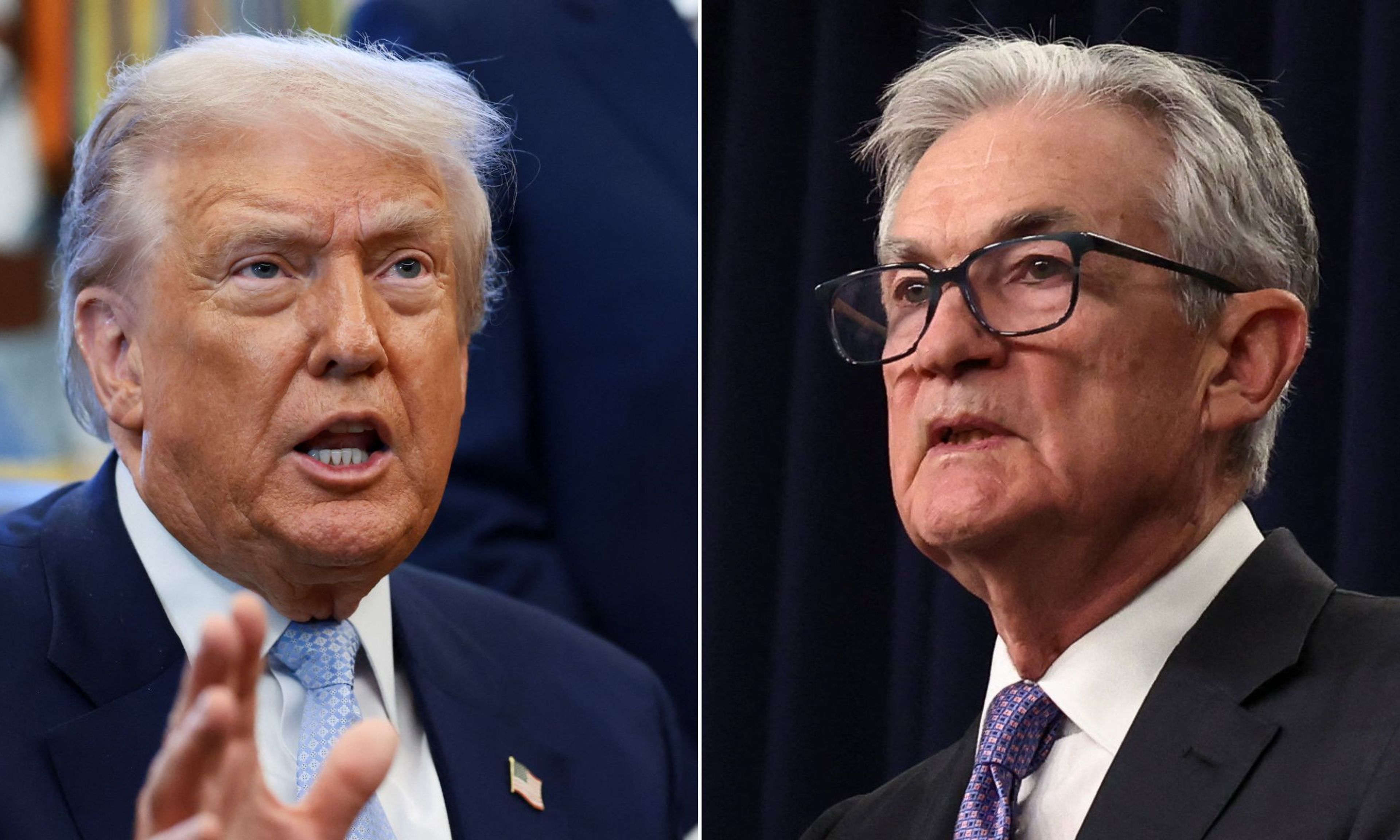
Today’s announcement that the Justice Department is dropping its investigation of Federal Reserve Chairman Jerome Powell was inevitable: The investigation was baseless, and the cost-benefit analysis had turned decidedly negative for President Trump — his lawfare proclivities outweighed by his desire to influence monetary policy.
In describing the investigation as baseless, I am not saying anything the Trump DOJ itself did not say — at least when it figured no one was listening. I’ve written about the Powell probe a number of times, but in the most recent post, I described what happened behind closed doors when, in determining whether to quash subpoenas that Trump’s Senate-confirmed U.S. Attorney Jeanine Pirro’s office had served on the Fed, Judge James Boasberg (chief judge of the federal district court in Washington, D.C.) gave prosecutors an opportunity to put up or shut up:
While Judge Boasberg clearly doesn’t like the Powell investigation (no one sensible should), he is cognizant of the broad discretion federal prosecutors have to use grand juries to investigate crimes. The discretion is not limitless: courts may narrow subpoenas that are overly broad compared to the government’s legitimate needs or that appear to be onerous “fishing expeditions” when there is little reason to suspect crime. In addition, as Boasberg more controversially explained, there is precedent for the proposition that judges may quash subpoenas — even if grounds for suspicion exist — if the investigation is improperly motivated, as he found the Powell probe was.
Knowing that quashing the subpoenas would be controversial, however, Boasberg first offered Pirro’s office the opportunity — out of the hearing of the public and the Fed, to preserve investigative secrecy — to explain to the court what evidence it had that Powell had actually made false statements to Congress. While the DOJ has kept up the public storyline that Powell could be corrupt, it leaves unmentioned that it declined Boasberg’s invitation to demonstrate that there was a serious basis to investigate Powell — leaving the judge to draw the rational conclusion that this is politically motivated lawfare.
Despite all the bombast about potential corruption, the DOJ had nothing. Upon being called on it, the DOJ folded. As I detailed at the time, the only abundant evidence amassed in the matter involved the abusive nature of the government’s probe:
Even if political motivation weren’t manifest from (a) the Trump DOJ’s robust record of weaponized law enforcement against the president’s enemies and scapegoats, (b) the dearth of incriminating evidence against Powell, and (c) the lack of any request from Congress that the DOJ probe whether the Fed chairman obstructed one of its committees, there is also (d) the fact that the first subpoenas in the probe were served on the Fed a day after a White House event at which the president berated DOJ prosecutors for their foot-dragging on investigations of Trump nemeses. To say nothing of Trump’s infamous social-media excoriation of then-Attorney General Pamela Bondi over the DOJ’s reluctance in pursuing cases against Trump’s political foes, and his recent firing of Bondi while still stewing over the paucity and failure of those prosecutions.
It is the nature of lawfare — the corrupt leveraging of government law enforcement processes against political enemies and scapegoats — that its practitioners, such as the president, care less about whether there is a viable case than about putting their targets through the wringer of prohibitive legal fees, investigative anxiety, and stigma. Consequently, the absence of a viable case against Powell need not necessarily have been the end of the probe. As I explained in the above-excerpted post, Boasberg had legitimate authority to quash grand jury subpoenas, but he has no authority to prevent the executive branch from conducting an investigation, even a baseless one. The judiciary can only properly intervene in an investigation at the points where prosecutors need the court’s processes (subpoenas, warrants, etc.). There are countless aspects of government investigations that, though intrusive and expensive for the target, require no court permission.
Hence, my reference at the top to the cost-benefit analysis.
Much as Trump would like to continue harassing Powell, he also wants his nominee to replace Powell as chairman, Kevin Warsh, to be confirmed. Senator Thom Tillis (R., N.C.) has vowed that he would not allow Warsh’s nomination to be advanced — even though he supports the nomination in principle — unless and until the Trump DOJ dropped the Powell investigation. With the president’s approval ratings continuing to decline, it’s likely Tillis had the support he needed to make that threat stick.
Moreover, Trump also wants Powell off the Fed’s Board entirely. While Powell’s term as chairman expires on May 15 (assuming he doesn’t try to stay if Warsh has not been confirmed by then), his term on the Fed’s Board does not expire until early January 2028. At this point, I’d be surprised if Powell left early, but it was nearly inconceivable that he’d consider leaving while under the cloud of an investigation.
So the probe has been shut down. There was no prosecutable case and the immediate returns on the lawfare abuse had turned negative. I say “immediate” returns because, as Democrats could tell Trump, the broad public is opposed to lawfare and is poised to remind its practitioners come Election Day.

About the Author
Andrew C. McCarthy is a senior fellow at National Review Institute, an NR contributing editor, and author of Ball of Collusion: The Plot to Rig an Election and Destroy a Presidency.
Featured Tags
Advertisement
Advertisement
Comments