Share this story
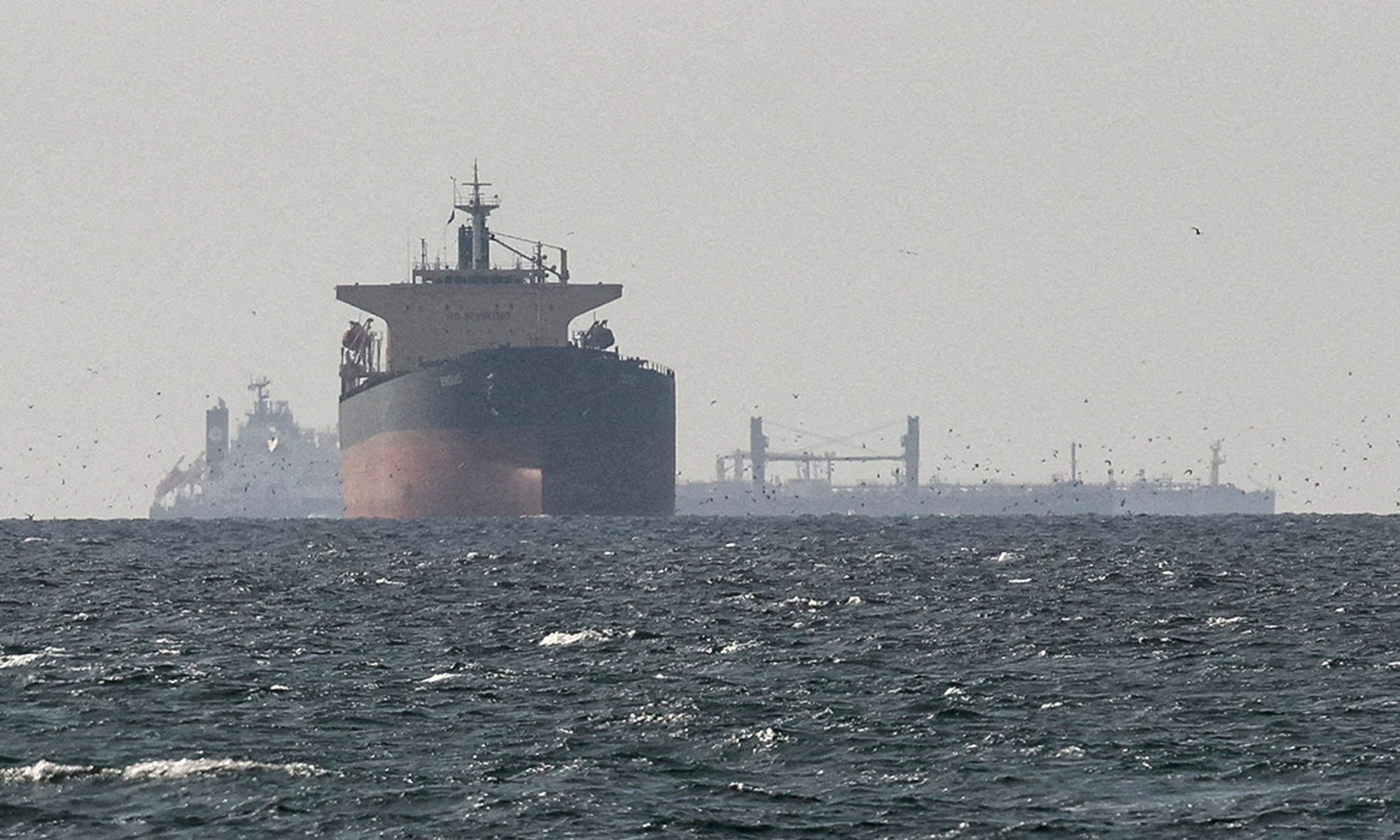
Giving only a week’s notice, the UAE will be quitting OPEC after 60 years. The news is not entirely a surprise, the UAE had long felt constrained by Saudi-policed production quotas, and the experience of coming under fire from Iran, a fellow OPEC member, might well have soured it still further on the oil cartel. Assuming the departure goes through, it will matter. Along with Saudi Arabia, the UAE is one of the OPEC members that has enough spare capacity to step up (or not) production and thus hold the cartel together. It accounts for some 12 percent of OPEC supply. Unlike previous OPEC departees (Angola, Ecuador, and Qatar), its departure will make a difference (Qatar is, however, a significant producer of natural gas). The UAE's move may also be a sign of the UAE’s closer alignment with Israel.
Writing in The Spectator, Matthew Lynn also suggested that Treasury Secretary Bessent, who played a smart game with Argentina last year, may have struck again:
Last week, Treasury Secretary Scott Bessent confirmed that the UAE had been given a “swap line” with the Federal Reserve, effectively a form of soft loan, to tide it over the collapse in revenues. There is already plenty of speculation that leaving OPEC was the quid pro quo for that arrangement, and it is hard to see why the US would agree to it otherwise? Behind the scenes, America is taking OPEC apart piece by piece.
OPEC’s diminishing power is being accompanied by an increase in American production.
The U.S. produced 13.2 million barrels a day in January, up from 5.4 million in January 2010. Production over the last two decades has also climbed in Canada, Guyana and Brazil. U.S. fracking pioneer Harold Hamm is making a big bet that Argentina’s Vaca Muerta shale deposit could become as productive as the Permian basin in Texas.
It’s generally not a great idea to bet against Harold Hamm.
Argentina’s oil production is taking off (and the country could certainly do with the hard currency). Javier Milei, the country’s libertarian president, has made it easier for producers to import the equipment they need and offered new tax incentives.
It’s working.
Fuelled by the shale boom, Argentina became a net energy exporter in 2023 for the first time since 2010. From 2021-2024, the country’s trade balance shifted from importing 32mn barrels of oil equivalent annually to exporting 76mn barrels of oil equivalent annually. Gasoducto Norte, a pipeline originally built to import gas north-to-south from Bolivia, was reversed in 2025 to sell Argentine gas south-to-north.
Investment in the sector has been strong since the start of the Iran war. Last month, Argentine gas pipeline company TGS announced a further $3bn investment in LNG processing in the Vaca Muerta.
With two new pipelines coming online this year, Argentina’s energy industry shows signs of growth to come. And while the country still lacks extensive gas transport infrastructure such as LNG export terminals, oil output and exports continue to soar.
And there’s also Venezuela to think about.
I’m reluctant to make any oil price projections, but it is beginning to look as if, even if there is a brutal short-term squeeze now, lower prices are coming.
But if prices fall “too” low, production will drop.
So, it was good to read this in the Wall Street Journal:
U.S. producers can turn a profit at lower oil prices (about $50 a barrel) than what most OPEC countries need to balance their budgets ($80 to $120 a barrel).
Sadly, Russia’s production costs are only around $15 a barrel.

About the Author
Andrew Stuttaford is the editor of National Review's Capital Matters.
Featured Tags
Advertisement
Advertisement
Comments