Washington State’s Somali-Run Daycare Centers Take in Millions of Taxpayer Dollars. The Numbers Don’t Add Up
Written by Abigail Anthony and Malia Marks
Share this story

During the State of the Union address, President Trump announced a “war on fraud” initiative, citing the scandal surrounding Somali-run daycares in Minnesota. But other states deserve scrutiny too.
Specifically, National Review looked into daycare programs in Washington State and found that Somalis are vastly overrepresented in childcare services relative to their share of the population. While this doesn’t necessarily indicate malfeasance, a deeper investigation found suspicious finances and operations in a number of taxpayer-supported entities, as well as limited transparency and government oversight.
To cite just a few examples, an entity registered with the state as dissolved received thousands in government funds, caretakers licensed for only a few children report hundreds of thousands in earnings or sales, and nonprofits receiving six-figure grants don’t even have working phone numbers.
While Washington State is home to some of the largest Somali communities on the West Coast, its approximately 15,000 residents of Somali descent represent a fraction of Minnesota’s estimated 76,000, according to recent U.S. Census Bureau figures. With more than 8 million Washington residents, individuals of Somali ancestry amount to less than a quarter of a percent of the state’s population. But they are significantly overrepresented in childcare-related services. According to a 2024 report from the nonprofit Child Care Aware of Washington, 6.7 percent of Washington childcare providers list Somali as the primary language. A database from the state’s Department of Children, Youth, and Families (DCYF) — which oversees childcare — shows that 249 of the state’s 6,857 licensed child-care providers list their “primary language” as Somali, about 20 times the amount that would be representative of the Somali share of the population.
However, the exact figures are unclear, since daycares can remove information about their operating languages from the state database. When National Review began investigating in December, the number of licensed daycares that publicly listed Somali as their primary language on the DCYF database stood at 283, while over 500 identified Somali as one of their “spoken languages” — but those numbers have fallen as the stories of rampant fraud in Minnesota grew into a national scandal. One nonprofit organization focused on childcare in Washington says it operates group communications with more than 600 Somali childcare providers and assistant teachers -- and if that’s the case, then at least one out of 25 Somali-descended individuals in the state works in child services.
The growth of childcare services generally has been encouraged by the state. Washington State’s population grew by nearly 1 million people over the past decade, but childcare capacity remained mostly static, leading organizations such as the Center for American Progress to claim that a majority of the state’s residents live in a “childcare desert.” To address this, the state passed the “Fair Start for Kids Act” in 2021 to allocate more than $1 billion toward childcare-related initiatives, and it expanded the financial assistance available to childcare-related services. As a result, daycare is a lucrative business with limited oversight. The state subsidizes up to $4 per child per hour for small “family home care” providers, a classification that includes almost all Somali-primary-language daycares in the DCYF database; these facilities can be licensed for up to twelve children. At this rate, a year of full-time care for four children would bring in over $33,000 in taxpayer dollars, while watching a dozen children would gross $99,840 in annual subsidies alone. But some providers earn much more. Kismaya Family Childcare, for example, is licensed to care for nine children but reported upwards of $750,000 in sales in 2025. The state paid Kismaya just over $120,000 in 2025, but its business entity was administratively dissolved in 2023, according to the state’s Corporations and Charities Filing System (CCFS) registry, so it’s not clear where that money ended up.
Aside from per-child subsidies, the state also has a long list of grant opportunities: The “Early Achievers Needs-Based Grant” awards up to $1,000 every fiscal year for various supplies, the “Quality Improvement Award” gives up to $9,000, and the “Child Care Complex Needs Fund” awards as much as $50,000 a year for disability-related improvements. And, as National Review previously reported, the DCYF’s “Early Childhood Equity Grant” program offers daycare providers up to $100,000 in state funds for “culturally responsive programming.” The department prioritizes grant recipients in part based on the racial demographics of the attending children, which likely violates the 14th Amendment and Title VI of the Civil Rights Act.
While the DCYF claims to have robust checks in place to prevent fraud, the state auditor -- a Democrat -- released a statement in January explaining that the agency has failed to appropriately audit its Child Care and Development Fund over the past four years due to poor record-keeping, which violates the terms of its agreement with the HHS and leaves questions about roughly $416 million in childcare spending. The DCYF did not respond to questions about its in-person inspections, methods for detecting fraud, awarding of funds to “dissolved” or “delinquent” businesses, and licensing of providers whose phones don’t work.
There are also numerous well-funded nonprofits operating in the childcare industry. When assessing whether nonprofit organizations are legitimate and reliable, Eric Cochling at the Georgia Center for Opportunity told National Review that he looks to see whether the organization’s website functions properly, whether the board members are listed, whether staff members are disclosed, whether financial documents or reports like Form 990s are provided, and whether the executive compensation seems appropriate. “The way nonprofits raise funds and sustain themselves is almost entirely based on trust and transparency,” he said. He added, “We're talking about organizations working with kids and families. They should be the most transparent.”
National Review examined a number of organizations in Washington State receiving taxpayer funds for childcare-related work. Several of the providers are related to one another and/or run organizations that share the same physical address -- and the organizations are rarely transparent.
For example, Fatima Adam is the executive director of the Supportive Childcare Provider Alliance nonprofit (previously known as the Somali Childcare Provider Association), for which she is paid roughly $60,000. The organization claims to offer services such as “technical support” and “nutrition support,” but its website lacks useful information and contains broken links. The most recent trainings offered by the organization were held roughly one year ago, while there do not appear to be any scheduled for the future. National Review called SCPA several times, but its phone number was not active. After NR emailed the SCPA and mentioned that its phone number and its website were inoperative, the phone number was removed from the website and several webpages were suddenly functional -- although the SCPA never directly responded to a request for comment. SCPA reported receiving more than $300,000 in government contributions in its recent financial forms.
Fatima’s sister Asia earns over $50,000 running the nonprofit Our Hope (previously “Hope Academy”), which shares a business address with the SCPA and similarly receives six figures in government funding. (Our Hope’s map on its website associated the address with another organization, the Somali Independent Business Association, although the site was updated after National Review requested comment.) On Our Hope’s website, the Supportive Childcare Provider Alliance is listed as a “sponsor” of Our Hope. Additionally, Fatima was listed as a “team” member with the title of “community engagement coordinator,” but her name and designation were removed after NR requested comment. (On the SCPA’s most recent Form 990, Fatima indicates that she does not work at any related organizations.) Our Hope appears on education directories as a fully functioning kindergarten through grade eight school that also provides after-school activities, and its own social media page describes it as a “State Certified Private School.” However, its website says nothing about the tuition, teaching staff, curriculum, or even school hours. When National Review called Our Hope’s phone number, an automated response offered “special offers” on “dream vacations.” (The website has since been updated to remove at least some mentions of its phone number.)
The two sisters were previously affiliated with the business Education for All, which shares the same address as Fatima’s SCPA and Asia’s Our Hope. Additionally, Asia is an officer at Small World Child Care LLC, which reported more than half a million in sales last year, though a daycare business with that name does not seem to be listed on DCYF’s database of licensed childcare providers. In one public record, the business’s profile includes a website address; the link does in fact describe a daycare -- in Idaho.

When National Review visited the SCPA and Our Hope’s physical address in Seattle on a weekday afternoon in early March, no children or staff could be seen through the building’s large, street-facing window. There were also no visible signs advertising Our Hope, the SCPA, or the Somali Independent Business Association. NR was unable to knock on a door to inquire further about the property, as the apparent entrance was behind an unmarked gate along the building’s fence. From the rear, the building was surrounded by overgrown blackberry bushes; a tipped-over basketball hoop was on the ground outside the fence. The second-floor windows were framed with sagging blinds and tied-up drapes, and some rooms appeared to be filled with cardboard boxes. The lights did not appear to be on.
The current president director of the Supportive Childcare Provider Alliance, Zainab Dirie, is a daycare owner herself. Her Mabsuud Daycare, which is licensed for twelve children and whose phone number listed on the DCYF directory doesn’t accept calls, received over $450,000 in state funding last year. (Dirie also has been forgiven for two PPP loans that total roughly $30,000, both of which were awarded for daycare purposes.) Dirie also owns Little Stars Early Learning Center, though there is not a licensed facility under this name. (Not to be confused with the “Little Star’s Early Learning Program,” which also appears to be Somali-owned; it is licensed for six children and has reported almost $800,000 in sales.) Although Dirie relocated and ran Mabsuud Daycare elsewhere, the house remains an active childcare hub. Honey Home Daycare LLC is registered to the home and reported at least $1.9 million in revenue since opening in 2023, but it is licensed for only a handful of children. Rather strangely, the Honey Home Daycare’s address -- a 1,400 square foot home -- is also identified as the location for Elle’s Bright Beginnings Daycare LLC, according to CCFS. But the daycare does not appear in the state’s database of licensed providers.
SCPA’s website, which was improved upon after NR requested comment, does not currently contain the detailed personnel and financial information that Cochling looks for, although the “donate” page works. When National Review began investigating, Our Hope’s website listed four staff members, but the “view full team” button was broken; the executive director, Asia, was not mentioned on the website, but Fatima (in a less senior role) was listed. Since requesting comment, all four staff members have been removed from the website. No financial documents are linked on the site, but the “donate” page functions.
Some of the discrepancies National Review identified could theoretically have reasonable explanations: Nonprofits may have a minimal online presence because employees are preoccupied performing other services and they don’t have the staff for website maintenance; a shortage of appropriately qualified individuals may contribute to staff overlap; experts in particular fields may have several simultaneous appointments as a result of their experience; and the possibility of technical issues or erroneous data entries can’t be ruled out in the reported sales figures.
Yet none of the organizations, businesses, or individuals mentioned above -- the SCPA, Our Hope, Kismaya Family Childcare, Honey Home Daycare, Little Star’s Early Learning Program, Asia Adam, Fatima Adam, and Zainab Dirie -- responded to requests for comment. When National Review called the number associated with Elle’s Bright Beginnings Daycare LLC, the woman who answered denied that its number was tied to any such business, and she hung up upon hearing that she was speaking to a reporter.
The DCYF states that it conducts an unannounced in-person visit at each licensed provider site at least once annually, and it further claims to conduct “random and focused audits.” The DCYF claims to have audited nearly 2,000 providers in 2025 and referred 14 to the Office of Fraud and Accountability, which resulted in zero prosecutions. Last year, the state spent $1 billion on the Working Connections Child Care public benefit, a program administered by the DCYF that uses state and federal funding to help families pay for childcare. Over the course of that year, the agency audited nearly 15,000 families out of 63,753 families that participated in the program; the department referred just under 4,000 cases to the Office of Fraud and Accountability, resulting in 13 cases prosecuted and three convictions.
While it’s unclear whether the discrepancies point to a Minnesota-type problem, the lack of transparency and accessibility from both businesses and organizations merits closer inspection.
Unfortunately, Washington State has firmly discouraged inquiries. After the independent YouTuber Nick Shirley released a long-form video in December documenting suspicious activity at Somali-operated childcare centers in Minnesota, the Trump administration took notice, and the Department of Justice had charged 98 defendants in Minnesota (85 of whom are of Somali descent) for fraud-related crimes by early January. Taking the opposite approach, Washington State Attorney General Nick Brown condemned “unsubstantiated claims of fraud targeted at daycares run by Somalis” in late 2025. He further warned that “showing up on someone’s porch” isn’t an “investigation,” and instead could potentially qualify as illegal threatening or harassing behavior. In fact, he encouraged anyone experiencing such activity to contact law enforcement or the state’s “Hate Crimes & Bias Incident Hotline.” And, just a day before being sworn in as the Seattle mayor, Katie Wilson expressed “solidarity” with Somali childcare workers by condemning “extremist influencers” who film.
Washington State is considering legislation that would expand privacy protections for childcare providers by removing their personal information -- even names and email addresses -- from public records, which would have the effect of impeding independent investigations and research.
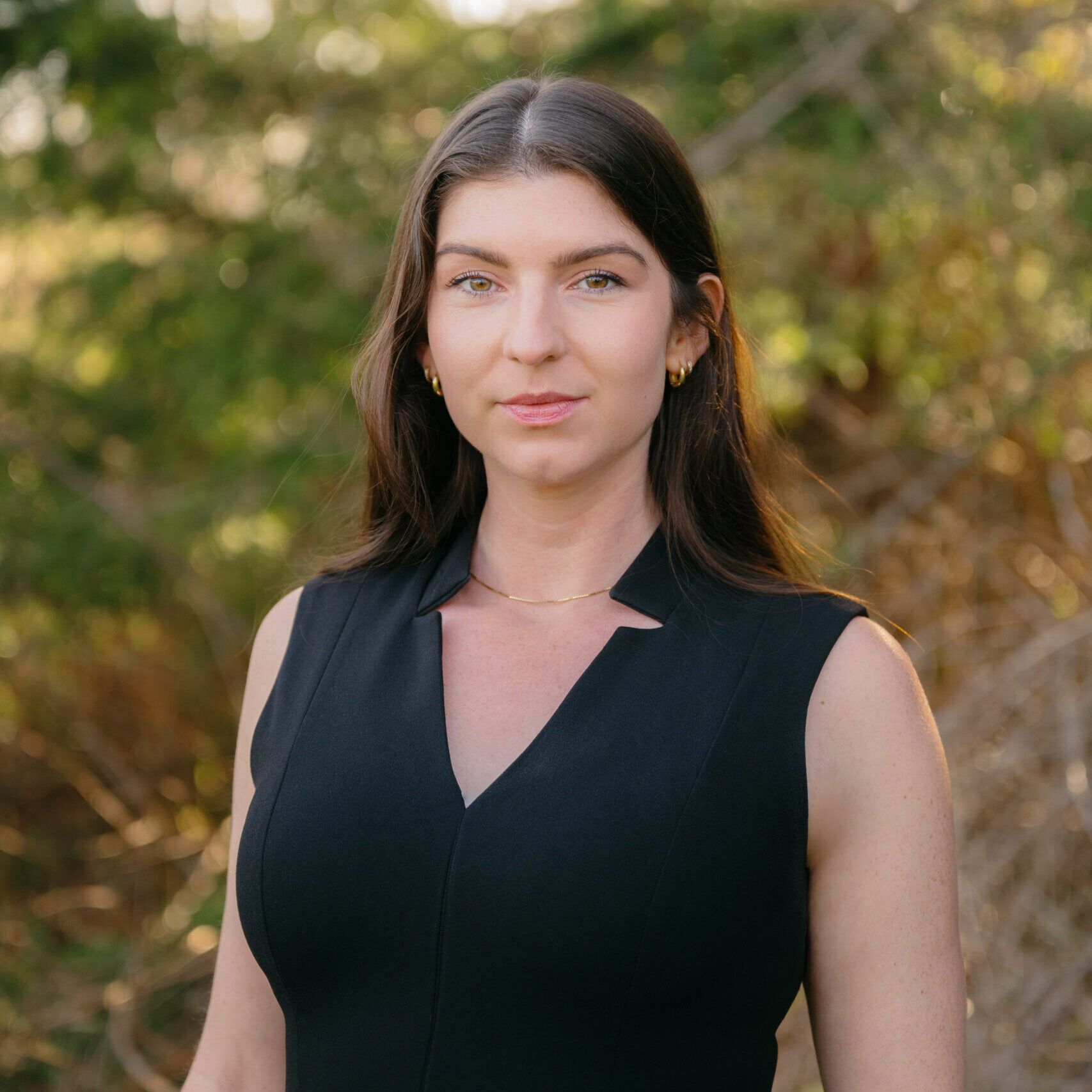
Abigail Anthony is a staff writer at National Review. Malia Marks is a Ph.D. candidate at the University of Cambridge department of psychology, where she studies authoritarianism and propaganda. She was born and raised in Washington State, and she previously studied at Harvard.

About the Author
Abigail Anthony is a staff writer at National Review.
About the Author
Malia Marks is a Ph.D. candidate at the University of Cambridge department of psychology, where she studies authoritarianism and propaganda. She was born and raised in Washington State, and she previously studied at Harvard.
Featured Tags
Advertisement
Advertisement
Comments