Share this story
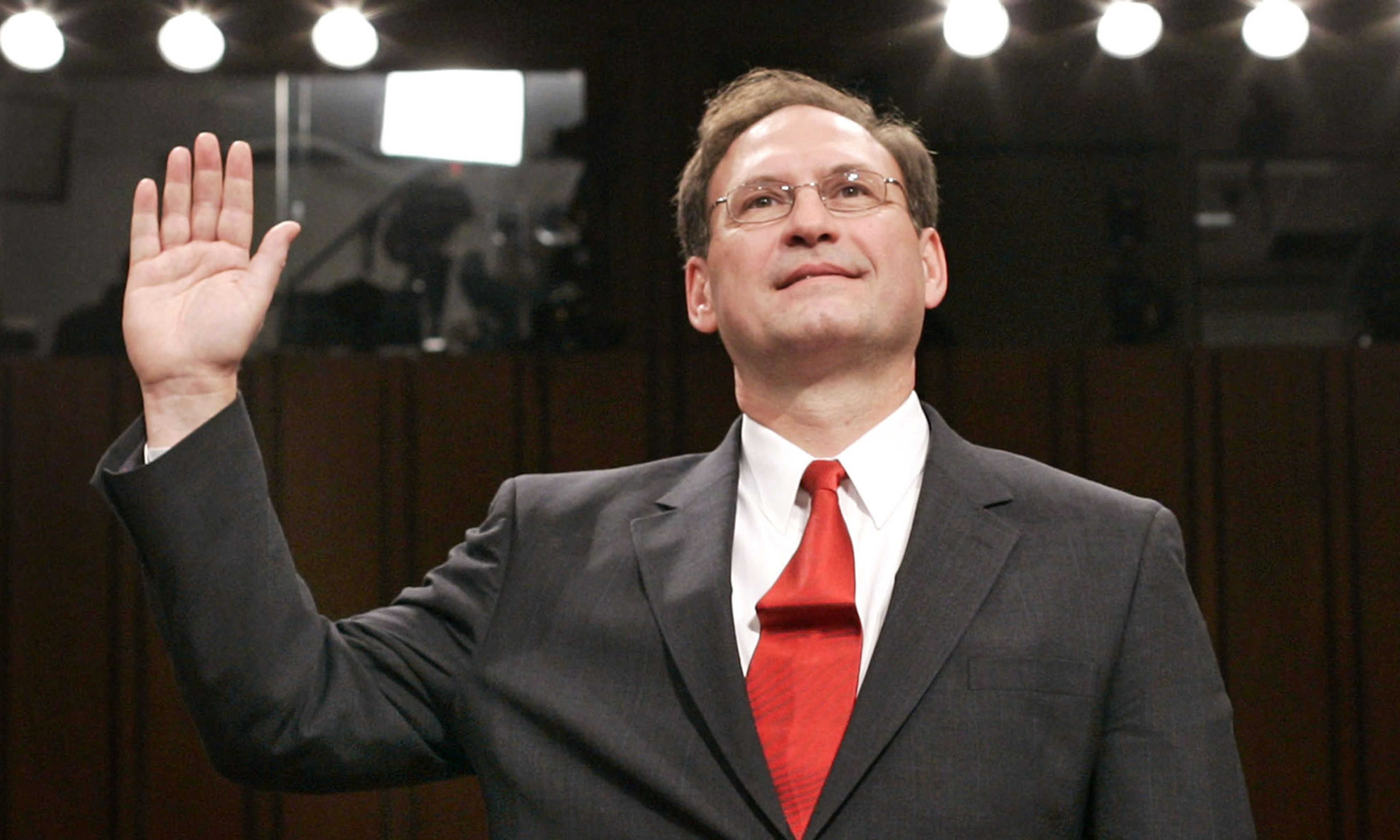
It seems Justice Alito isn’t going anywhere. That, of course, doesn’t stop the D.C. parlor game of debating who the next Republican justice should be. I have opinions on this, but I try to keep them to myself. I don’t think it’s productive to run down excellent judges in public, and the field — to a man — is full of excellent judges.
That’s the trouble with the parlor game: Before long it converts to open warfare. The contenders all have their own groups of assassins (mostly friends and former clerks) who fan out to promote their candidate and undermine the opposition.
This is because picking a Supreme Court justice is zero-sum. There is a winner, and there are many losers. As John McCain’s late, liberal judge picker, Grant Woods, once said to me, “Picking judges is a thankless job because, in the end, you get four enemies and an ingrate.”
It’s not a universal practice, of course. After the election in 2016, Judge Sykes forbade my co-clerks and me from attacking any of her competitors. We knew she meant it. Of course, Judge Sykes went on to be Chief Judge Sykes and not Justice Sykes, so you can see why the more ambitious contenders would not adopt her approach. In recent years, the winner’s team has always fought hard and often fought dirty.
Even Ketanji Jackson’s allies worked overtime to undermine Michelle Childs when she started picking up bipartisan steam in 2022. Lindsey Graham was a far stronger and more effective ally to Childs than those on the left who undermined her at every turn — a fact she seems to have forgotten in her recent progressive turn on the D.C. Circuit.
For my part, I’ll keep trying to dwell on the strengths of credible contenders and not, again, trying to run them down. That is, provided that they’re conservative.
The justification for the Richard III approach to Supreme Court competition is essentially that these questions need to be hashed out loudly and publicly to avoid another Souter, Kennedy, or O’Connor. That’s obviously a worthy goal, but in this context it becomes a rationalization.
The fact is that all but a handful of the circuit judges appointed by Donald Trump meet the standard of not being a Souter, Kennedy, or O’Connor. In the post-filibuster age, concerns about Senate-confirmability among Republicans have been largely restricted to qualifications. As a result, the vast majority of Trump judges are highly competent right-wingers with pre- and post-judicial track records. Incidentally, this is why the Trump judges are still — with the notable exception of the solicitor general — the surest pool from which to select a justice, capers about senators aside.
The confirmation of Sam Alito is actually instructive. Given his flawless performance at the Supreme Court, it’s generally assumed today that he was the obvious proto-based pick once Harriet Miers flamed out. “We need to pick another Alito,” would go the refrain. That’s not actually how it went.
In 2005, on paper, the most hard-charging conservative available was Mike Luttig. Not only was he smart, conservative, and young, but he was notorious for aggressively using his narrow en banc majority to ruthlessly stymie the Fourth Circuit’s liberals at every turn. He hired the best, most conservative clerks and sent almost all of them to the Supreme Court (usually to Scalia or Thomas). Today, Luttig is a comrade-in-arms of arch-liberal Nancy Gertner; alongside her, he urges the Supreme Court to let blue-state trial judges ignore their orders.
Alito, by contrast, was the pick of the sophisticated D.C. legal elites. He was the preferred choice of Bush’s judge picker Bill Kelley, a Notre Dame professor, Ken Starr protégé, friend of Brett Kavanaugh, and mentor to Amy Barrett. Jan Crawford explains in her fantastic book Supreme Conflict that Kelley convinced Harriet Miers that Alito was the guy because he had “the ideal combination of intellect, conservatism, and quiet confidence.” She and her colleagues also loved how he “hadn’t acted like he wanted it too much.” In the end, Kelley said of Alito, “he’s never written a wrong opinion.”
That was Kelley’s view but not necessarily that of important social-conservative activists at the time. Alito had dissented in Planned Parenthood v. Casey, true, but it was not a full-throated, Edith Jones condemnation of Roe v. Wade. As my colleague and Bench Memos founder Ed Whalen explained in his Confirmation Tales Substack, a prominent pro-life group came out against Alito just before his nomination because he ruled against a pro-life outcome in a case about administrative law. The group went so far as to try and recruit then–Senator Rick Santorum to oppose Alito (unsuccessfully).
Alito also had concurred in a judgment from Judge Maryanne Trump Barry (yes, that Trump) striking down New Jersey’s ban on partial-birth abortion. He didn’t join in her sweeping opinion, but he concluded that he was bound by the Supreme Court’s partial-birth ruling in Stenberg v. Carhart. I can say first-hand that this did not go over well with New Jersey pro-lifers (a cohort in whose ranks I stood at the time). Years later a prominent pro-life lawyer from New Jersey would tell me that he had no regrets about trying to sound the alarm about Alito because he simply didn’t have to rule the way that he did in the partial-birth case.
In other words, in 2005 even the great Sam Alito — the man who killed Roe v. Wade — had his record picked apart by the right on abortion. The fact is that there hasn’t been a stone-obvious choice in 40 years; everyone has political vulnerabilities.
Thank God D.C. legal elites like Bill Kelley, Mike Carvin, and Ed Whelan were able to focus on fundamentals and got their way with the guy who didn’t seem to want it too much. If they hadn’t, and had the president gone with the strongest audition instead, the right’s new slogan might have been “No More Luttigs.”
About the Author
Michael A. Fragoso is a lawyer in Washington, D.C. and a fellow at the Ethics and Public Policy Center. He previously served as chief counsel to Senator Mitch McConnell and chief counsel for judicial nominations and constitutional law on the Senate Judiciary Committee. He clerked for Judge Sykes from 2014 to 2015.
Featured Tags
Advertisement
Advertisement
Comments