Why Is Louisiana Seeking to Rewrite the Past on American Energy Production?
Written by Michael Toth
American oil and gas companies shouldn’t be punished for supporting World War II–era efforts in pursuit of energy dominance.
Share this story
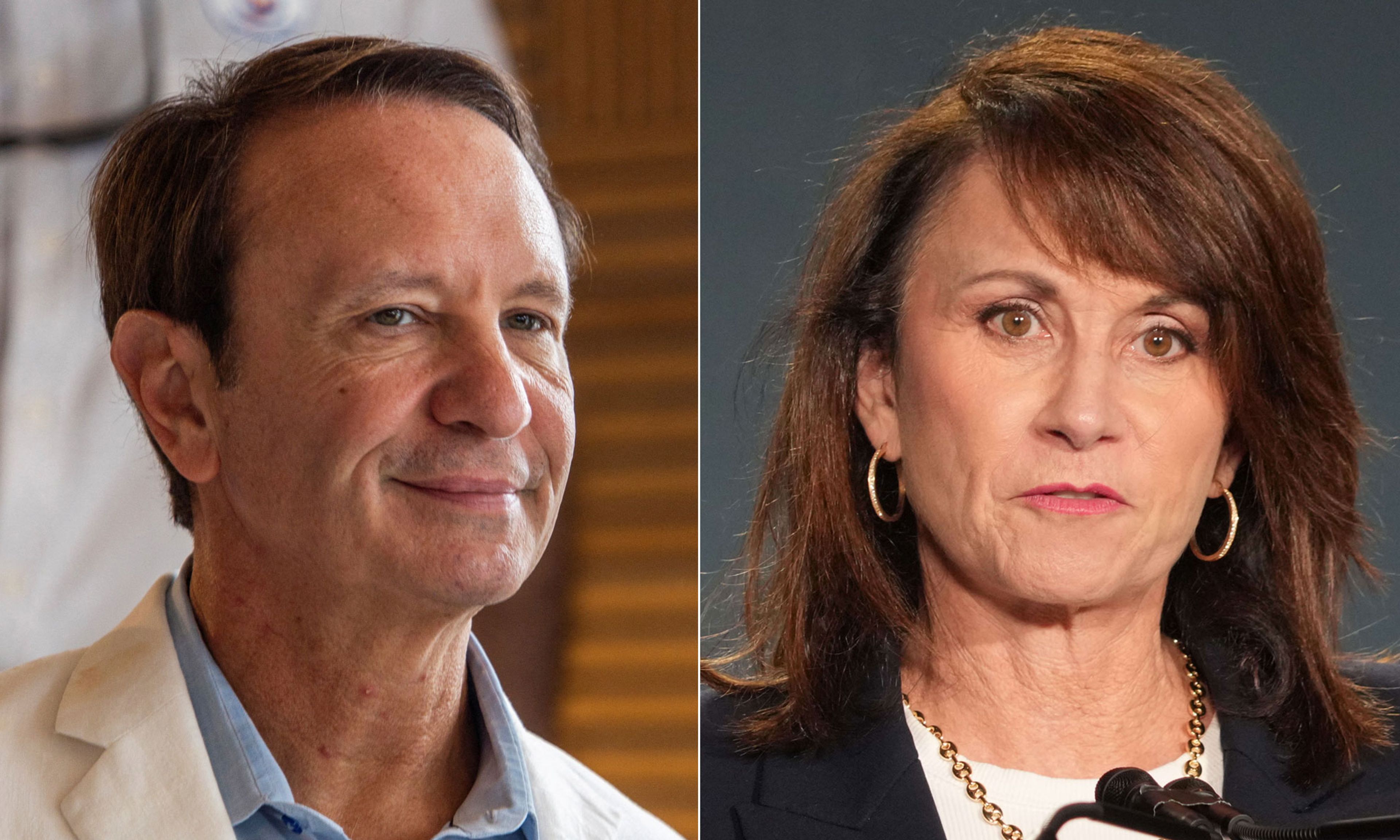
Suing American energy producers over meritless claims does nothing to advance national energy dominance. So why are Louisiana Governor Jeff Landry and Attorney General Liz Murrill, both MAGA Republicans, on the opposite side of U.S. energy companies and the Trump administration in Chevron v. Plaquemines Parish, a nine-figure-plus energy case that will be argued before the Supreme Court next week?
Since 2013, Louisiana parishes (the equivalent of counties in other states) have initiated more than 40 lawsuits seeking to hold oil and gas majors accountable for coastal erosion allegedly linked to projects dating back to World War II, when the companies were charged by the federal government to ramp up energy production.
The private trial lawyers who have teamed up with Governor Landry and AG Murrill to bring the land-loss cases are trying to rewrite history to remove the federal government's massive role in the oil production that spiked in the Louisiana Gulf Coast to meet the military’s wartime needs during WWII. If they succeed, billions of dollars could be diverted to legal fees that might otherwise supply U.S. tech giants with the affordable energy they need to outpace China in the AI race.
President Trump is not the first (and hopefully not the last) Oval Office occupant to champion an energy dominance agenda. Decades ago, Franklin D. Roosevelt unleashed American energy to fuel the Allied war effort. America’s resilient and highly productive industrial base was a game-changer in WWII. FDR foresaw the role that private enterprise could play in the war effort: Dr. New Deal became Dr. Win-the-War.
There’s probably no area in which FDR’s wartime about-face is more apparent than in energy. For much of his first two terms as president, there was no love lost between the executive branch and oil and gas companies. Throughout the 1930s, the Justice Department prosecuted the industry, ultimately prevailing against numerous companies at the Supreme Court in the Socony-Vacuum Oil antitrust case (1940).
Europe’s fall to the Nazi war machine prompted FDR to reevaluate the domestic energy industry. In May 1941, Roosevelt appointed his close confidant, Interior Secretary Harold Ickes, to serve as Petroleum Coordinator for National Defense, responsible for “the development and utilization with maximum efficiency of our petroleum resources . . . to meet military and civilian needs.”
The situation was dire. The British Navy was running out of fuel as German U-boats operated with impunity. The Roosevelt administration moved in a bold new direction and allied itself in an effective partnership with a one-time industry rival.
Three quarters of the officials for the newly created Petroleum Administration for War (PAW) came from the oil and gas industry. The federal government waived antitrust enforcement so energy companies could work in tandem to scale production — an extraordinary measure, undertaken only because, as the saying at the time went, “There’s a war on.” Ickes came to be called the “Oil Czar” in recognition of his broad authority.
The results of Roosevelt’s mobilization of the energy industry were impressive. Under the direction of the PAW, oil and gas companies stretched their productive capacity to the limit, contributing 6 billion of the 7 billion barrels of oil that the Allies consumed from December 1941 to August 1945, and 90 percent of the 100-octane gasoline used by Allied aviators. Even Joseph Stalin, not a fan of entrepreneurial capitalism, praised the “American oil industry” for giving the Allies a critical edge in “a war of engines and octanes.”
The coastal erosion lawsuits seek to punish companies for bringing FDR’s energy dominance agenda to fruition. An expert witness retained by Louisiana has faulted WWII-era oil and gas companies for “using vertical drilling” and “extracting too much oil,” among other practices. But employing different techniques from those adopted at the time would have slowed down oil and gas production contrary to the defense mandate to “eke out the greatest possible number of barrels of product,” according to a 1942 report from Oil Czar Ickes’s agency.
It’s not difficult to imagine how FDR would have responded to efforts to tie up his energy dominance agenda in legal roadblocks. The four-term president was famously impatient with judicial pushback against his policy ambitions, proposing at one point to “pack” the Supreme Court after the justices invalidated various New Deal programs. President Trump, for his part, has made it the official policy of his second administration to oppose state court litigation efforts to burden U.S. oil and gas companies with “arbitrary or excessive fines through retroactive penalties.” In furtherance of the new administration’s energy dominance agenda, the DOJ has filed briefs at the Supreme Court opposing the Louisiana coastal litigation.
When the justices hear oral argument in the case next week, Trump administration lawyers will have to contend with attorneys working with Louisiana Governor Landry and AG Murrill, who have consistently backed the land-loss cases for what appear to be ultimately political reasons. In 2016, then-Attorney General Landry signed a joint agreement with private contingency-fee lawyers to prosecute the coastal lawsuits. The firm’s partners later donated $300,000 to help elect him governor.
As the coastal litigation has proceeded, Governor Landry and AG Murrill have been unable to detach themselves. The joint prosecution agreement that Governor Landry signed prohibits the state from “expressly or impliedly endors[ing] any substantive defenses or exceptions raised by any defendant.” This unfortunate provision effectively locked the state into going along with a multi-billion shakedown of the energy companies that are unleashing supply to the relief of Americans at the pump. This should be a fair warning the next time that trial lawyers come looking for MAGA-aligned politicians to underwrite the latest crusade against U.S. companies.
At this juncture, the Supreme Court doesn’t have to determine what caused the land loss in the Louisiana gulf. Rather, the upcoming argument before the justices is on whether the coastal erosion cases belong in state or federal court. The Louisiana trial lawyers that have teamed up with Governor Landry and AG Murrill are trying to keep the land-loss cases out of federal court. If they are successful, they could extract billions from oil and gas companies. In April 2025, a state court jury returned a $744.6 million verdict in a coastal erosion case based on legal theories that federal courts have already rejected in other land-loss cases.
The justices should adopt the opinion of Trump appointee Andrew S. Oldham of the Fifth Circuit Court of Appeals. When the Plaquemines case came before the Fifth Circuit in 2022, Judge Oldham explained that the oil and gas companies during WWII could not “snap their fingers, and voilà, make [aviation gasoline].” They needed materials for the end product. Those components came from the exploration activities at the center of the land-loss cases.
The Supreme Court has an opportunity to direct the Louisiana land-loss cases to federal court where the lawsuits can be properly adjudicated. As Judge Oldham pointed out, the drilling activities of the oil and gas companies are “undeniably” “related to” federal directives from WWII. Louisiana can’t weaponize its state court system to rewrite the past at the expense of national energy dominance today.

About the Author
Michael Toth is the director of research at the Civitas Institute at the University of Texas, Austin.
Featured Tags
Advertisement
Advertisement
Comments