Whittaker Chambers Turns 125
Written by Daniel J. Flynn
Chambers is perhaps the most misunderstood figure of the postwar American conservative movement.
Share this story
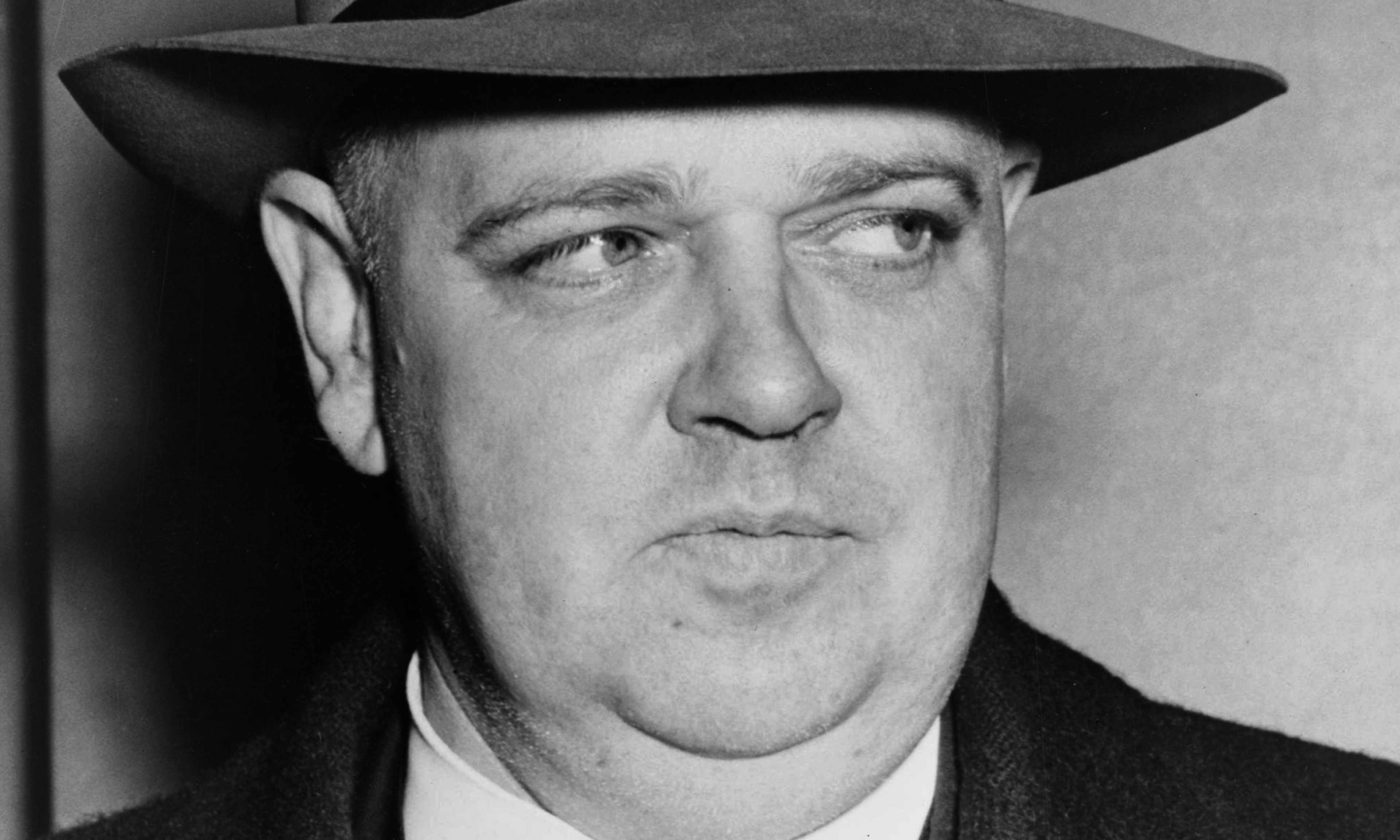
This week marked the quasquicentennial of the birth of the most misunderstood major figure in the history of the postwar American right.
History casts Whittaker Chambers, by virtue of his forever linkage with Alger Hiss, as the political opposite of the Soviet spy — just as his obesity, questionable dentistry, shoegazing, and unkempt appearance cast him as his social opposite in real time. His brief but important association with National Review buttressed this misperception of Chambers as a right-wing avatar. Much of the gap between perception and reality owed to the conservative projection of fantasy upon Chambers and the left’s demonization of him. He was neither demon nor daydream but a skilled writer, holder of heterodox positions, and a courageous man who called out traitorous perfidy when others shut their mouths.
“I always felt that Whittaker was the most misunderstood person of our time,” Arthur Koestler reflected in 1961. This view finds support in a few heretofore hidden letters, particularly ones found in an Altoona, Pa., warehouse during my research for The Man Who Invented Conservatism: The Unlikely Life of Frank S. Meyer, shared here for the first time.
One late-in-life misperception of him begins early in his relationship with William F. Buckley Jr. Those familiar with both men know that it developed into a beautiful friendship. They do not know that it did not start that way.
In 1953, personages on the right understood that palpable conservative energy demanded articulation in some broad project, perhaps a magazine. Whittaker Chambers called for a meeting of a dozen conservatives to discuss next steps. Given that an opposition to the left but little else united those considered for the meeting, potential participants naturally objected to the inclusion of other potential participants.
Remarkably, given how close the two men would grow in the next eight years, Chambers, as a letter kept at the Hoover Institution Library and Archives shows, objected to the inclusion of Buckley.
“I wanted very much to invite Bill Buckley,” Willi Schlamm, who had hoped to host the gathering, explained to publisher Henry Regnery in an October 1953 letter, “but Whittaker seemed to have some objection; he now doesn’t want to come at all. [Human Events editor] Frank Hanighen and I went up to Westminster a week ago Friday, and I brought up the subject of our proposed meeting. Frank Hanighen remarked that the list I had proposed wasn’t sufficiently American. I don’t think that this made much sense, and Whittaker was so disturbed about it that he feels now he shouldn’t come at all.”
It was Chambers’s idea, his former Luce media empire colleague reasoned. So Schlamm yielded despite his recent efforts to boost Buckley.
Buckley later courted Chambers to join National Review’s masthead. Chambers demurred, but in the process came to respect Buckley and enjoy his company. As Sam Tanenhaus put it in his magisterial biography of Chambers, “The vibrant young Buckley filled the chasm in Chambers’s life. . . . A few hours with his young friend lifted his gloom, the heavy compound of physical discomfort, mental exhaustion, and moral despair.”
In a turnabout, Chambers’s old friend replaced his new friend as a major impediment to signing on. Schlamm proclaimed his decision in the magazine to withhold a vote from Dwight Eisenhower and, along with others, cheered on Senator Joseph McCarthy in a way that discomfited the moderate onlooker.
On August 12, 1957, Schlamm exited. Twenty-three days later, Chambers submitted his first manuscript to National Review.
The press and posterity depicted him as grim to a degree that audiences wondered whether they read about a sad-eyed biblical prophet or a forward-facing, 20th-century intellectual. Colleagues at National Review found the new senior editor ridibund and jolly.
Chambers believed in the transcendence of God, hated communism, and saw America as operating within the continuity of the Western tradition. Otherwise, his views clashed as much as they meshed with his colleagues. Amid a cast of characters who viewed the Republican in the White House with great suspicion, Chambers operated as a garden-variety Eisenhower Republican. At the very time that Irving Kristol depicted National Review as overwhelmed by sympathizers of the Austrian school of economics, Chambers explicitly rejected the teachings of Ludwig von Mises. He believed in the future and did not hold up a stop sign to impede history’s march.
The great surprises concerned his anticommunism. When a court decision enabled Alger Hiss to obtain a passport, Chambers bucked the conservative line to become an unlikely supporter of the civil liberties of the man he had helped imprison.
And after Soviet dictator Nikita Khrushchev visited the U.S. in the summer of 1959, Chambers chose to leave National Review. The magazine’s major players regarded it as an abomination for America to host this “butcher,” let alone for the leader of the free world to meet with him at Camp David. Senior editors Frank Meyer and Brent Bozell joined with Democrat Christopher Temple Emmet to organize an unwelcoming committee of sorts for Khrushchev’s visit in the Committee for Freedom for All Peoples. Buckley spoke forcefully against it at a raucous Madison Square Garden rally. The opposition to the unprecedented visit to the U.S. from the leader of the Soviet Union went beyond articles in the magazine to energetic activism outside of it.
Chambers found himself at odds with his fellow editors. And with his health preventing trips to the New York office, Chambers resigned. On December 12, 1959, Frank Meyer offered Willmoore Kendall, then abroad in Spain, his interpretation of the break. He wrote:
The inner history of the Chamber’s [sic] resignation (in terms of the Bill-Whit relationship) I have no way of divining. But to Bill’s credit, I think it can be said that it is fundamentally ideological, although the initiative of actual resignation came from Chambers. I discussed some of his attitudes once or twice with Bill after our Yacht Club luncheon, and I have talked to Whit once or twice. What happened, I think, is that his basic position which has for some time been determinist — and if not materialist, then pantheist in a peculiar scientistic form of biological mysticism — came to a political head with the Khrushchev visit. Whit violently disapproved of NR’s stand at that time and later, since he thinks that a new collectivist scientific age is dawning, in which there will be no East or West. He says he doesn’t approve of it, but there is nothing to be done about it but observe it and go along with it, and he thinks that to fight the wave is childish. The Khrushchev visit and the co-existence of Camp David sharpened up his split with everything NR stands for, and he felt he could no longer be associated with it. This, at least, is my interpretation. On the specific question you asked — typical of the man — he is attending some Maryland college, studying science and Greek as an undergraduate; Greek, I would assume from conversations with him, in the spirit of those who see Hellenic culture as the ancestor of our scientific dispensation.
Chambers ceased his association with the magazine. His friendship with its editor, as evidenced in the bound collection of warm letters between Buckley and Chambers called Odyssey of a Friend, continued unabated.
Then, on July 9, 1961, Chambers, 60 going on 90, suffered another heart attack and died. A July 19, 1961, letter from Meyer to Bozell illustrated the depths of Buckley’s despair.
“Bill was more broken up than I have ever heard him,” Meyer relayed to Bozell. “I think the circumstances of the death, private cremation with no one, even Bill, knowing about it until two days later, and the general state of Bill’s communications with him in the past few months, have brought home to him the very bad state of Whit’s circumstances and conceivably (this is, of course, just a guess) made him feel that he had somehow failed Whit spiritually.”
Meyer told Bozell that Buckley had stopped coming into the office and left James Burnham to tackle the biweekly National Review Bulletin alone. Priscilla Buckley confessed that her brother appeared more affected by his friend’s death than even his own father’s passing three years earlier. The end of the relationship saw the two men in a much closer place than they were in its beginning.
Whittaker Chambers knew himself enough to title his classic book Witness. History vindicates him as an accurate witness. History itself has been less accurate in its depictions of Chambers.
About the Author
Daniel J. Flynn, the author of The Man Who Invented Conservatism: The Unlikely Life of Frank S. Meyer, is an American Spectator senior editor, visiting fellow at the Hoover Institution, and YouTuber @RightWingWilderness.
Featured Tags
Advertisement
Advertisement
Comments