Unlock America’s Arsenal of Energy
Written by Andrew Follett
The U.S. has reclaimed energy dominance but needs to safeguard that advantage through permitting reform.
Share this story
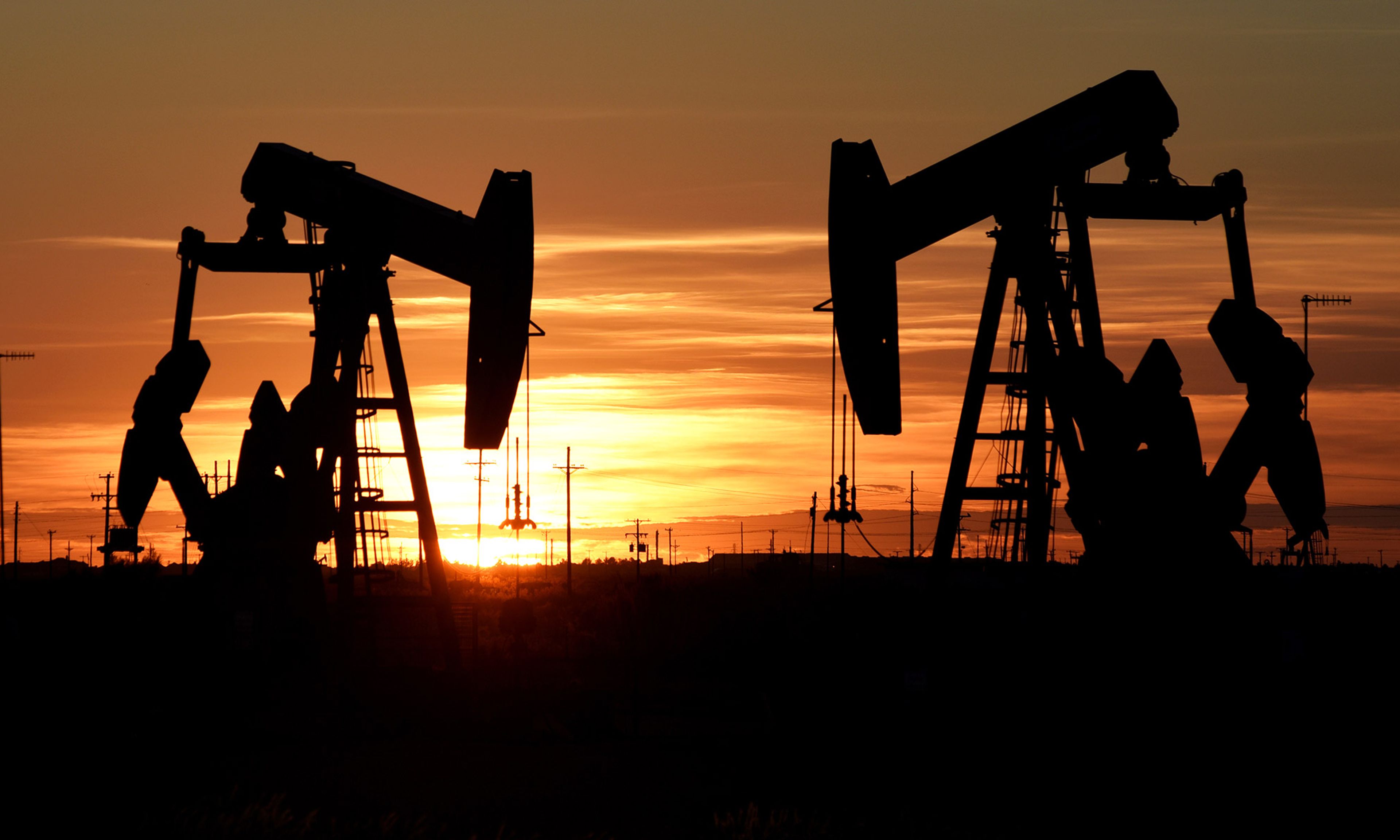
U.s. energy exports have surged to record levels, delivering us a powerful strategic advantage in an era of great-power competition. But our permitting system, rooted in laws such as the National Environmental Policy Act of 1969, stands as a bottleneck that has prevented America from fully capitalizing on our energy abundance and maintaining a strategic edge in international affairs. To retain our energy advantage, it’s imperative that Congress act on legislation to reform our broken permitting system.
Congress is currently debating seven distinct permitting reform bills, most of which would operate by imposing deadlines on Department of Energy approvals and streamlining the permit process.
These reforms are vital, as U.S. energy projects today face average approval timelines of nearly five years, with major infrastructure often taking a decade or more. Worse yet, projects can be canceled by a single hostile politician for no good reason. That precariousness — combined with the mountain of paperwork required to secure a project’s approval — discourages potential investment and raises consumer energy costs, handing leverage to America's rivals.
Legislation imposing hard timelines on permitting, ensuring that federal agencies can no longer arbitrarily suspend already-issued approvals for energy projects, and forcing regulators to acknowledge applications within 60 days with a presumption of rapid approval would go a long way toward fixing the current system.
Additionally, Congress can and should go further by requiring federal agencies to complete Environmental Assessments (EA) in just one year, designating one lead agency per project to eliminate duplicative reviews, and restricting review to direct projects.
At present, EPA-mandated Environmental Impact Statements take more than two years on average to complete, with nearly one-third of statements facing lawsuits that add between one and four additional years to the timeline. Pipeline builds, liquefied natural gas (LNG) terminal expansions, and new drilling leases thus become trapped in a tedious cycle of multi-agency reviews, multi-year litigation, and duplicative state-federal overlaps. The data reflect this: The U.S. permits energy projects at an 80 percent slower rate than peer nations.
Addressing the permitting problem would end the toxic climate of regulatory risk that currently consumes the U.S. energy sector. At present, delays cost up to $1.5 trillion in lost investment — and expose our allies to energy blackmail. In just one example, the U.S. literally couldn't pump gas fast enough to meet Europe’s energy demands due to our own permitting rules.
For Europe, impeded U.S. energy exports represent a significant strategic vulnerability. The continent has historically been supplied by Russia — an adversary that has repeatedly used energy as a geopolitical weapon, subjecting their deliveries to price manipulation and politically motivated supply cutoffs. The result of reliable American energy exports would be greater energy security, price stability, and strategic autonomy for European nations at a time when great-power rivalry is intensifying — and the continent is short on essentials like jet fuel. But for that to happen, the U.S. regulatory system would need to unlock our energy faster.
America’s net natural gas exports have jumped nearly 30 percent in just the last two years, according to Energy Information Administration (EIA) data. They're predicted to more than double by 2029, providing a key strategic edge analogous to pre-World War II pledges to "Boil Hitler In Texas Oil."
America’s energy industry did not merely participate in the Second World War; it decided the outcome. American energy abundance, produced at massive scale and exported reliably to allies, turned the tide against adversaries who weaponized or suffered from energy scarcity. Indeed, Imperial Japan attacked Pearl Harbor primarily because of a U.S. energy embargo.
The modern-day strategic value of U.S. energy has been demonstrated by Iran's recent attacks on energy export infrastructure such as Qatar's Ras Laffan LNG hub and export facilities, which could take up to five years to repair. Iran has pledged to further target energy sites, threatening Europe's energy supply and potentially forcing the continent into rationing schemes, if not for stepped-up American imports.
Without the buffer of abundant domestic production, Europe is facing an acute energy crisis that is worse than the 1970s oil shocks. That’s why the continent needs U.S. permitting reform.
Such reform would have clear benefits for the United States: Record exports generate revenue, support high-paying jobs, and lock in long-term contracts that strengthen transatlantic ties. Europe’s demand also insulates U.S. producers from volatility in Asian markets (where U.S. LNG exports actually declined in 2025, amid trade tensions with China).
Under the Trump administration, America has gone a long way toward reclaiming our energy dominance. Surging U.S. energy exports, especially the strategic pivot toward Europe, have turned American energy into both an economic powerhouse and a geopolitical asset, giving the United States a decisive edge over our rivals while providing our allies with a more secure and aligned alternative to Russian energy. But only permitting reform will ensure that advantage is safeguarded in the long run.

About the Author
Andrew Follett conducts research analysis for a nonprofit in the Washington, D.C., area. He previously worked as a space and science reporter for the Daily Caller News Foundation.
Advertisement
Advertisement
Comments