Kate O’Beirne, C. S. Lewis, and God’s Mercy
Written by Kathryn Jean Lopez
Grief is ever-present, even nine years later.
Share this story
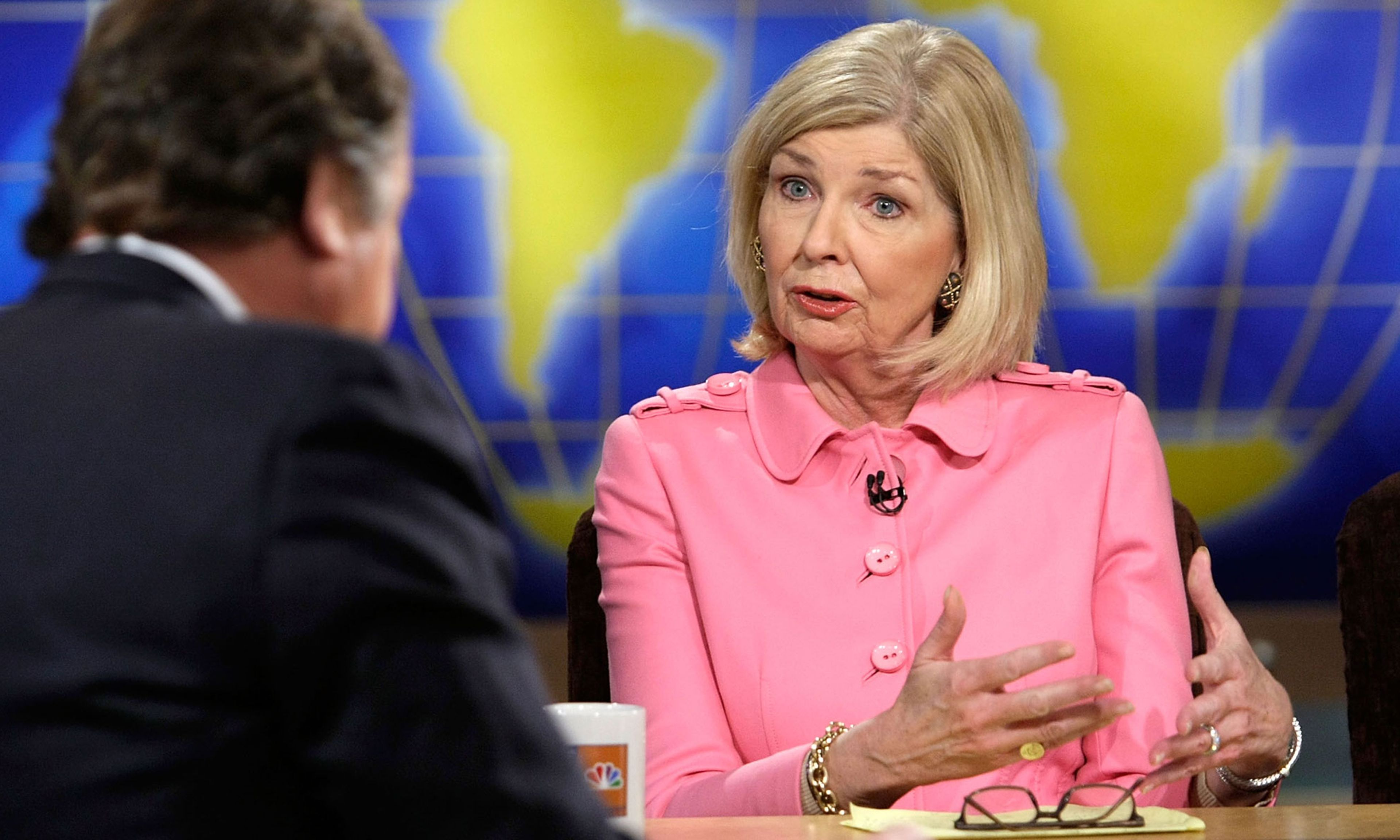
It was during the hour of Divine Mercy on April 24 when I realized what I had missed: the anniversary of the death of my dear friend Kate O’Beirne. I had been thinking about her a lot lately, as I typically do, but I hadn’t done anything special or different on the 24th. In truth, I had already marked the anniversary in prayer. Kate died on Divine Mercy Sunday in 2017. Her family was praying the Litany of the Saints by her bedside as she took her last breath. I was at Mass when a member of Congress, a friend of ours, texted me that she had gone to our Lord.
Grief is a multifaceted mystery. It is, to reclaim an earlier meaning of the word, queer. It never fully disappears; it will turn down its volume now and again, only to spring loudly back to the forefront of your life when it is least expected. It’s inescapable. Many of us fear it, deny it, reject it. If we face it, however, we might just come to learn something about the depths of our hearts — how they reflect and are healed by the Creator of the universe.
Divine Mercy is a Polish devotion that Pope John Paul II popularized for the universal church. Three o’clock is traditionally known as the hour when Jesus died on the cross in Jerusalem. For our sins. That’s what Christians believe. And whatever it is you’ve done, there is divine forgiveness and healing. With God, there is more than we could ever ask for — or even dream of. I’ll never hear the chaplet devotion often prayed in Catholic churches or institutions at 3 p.m. without thinking of Kate.
I am somewhat loath to offer consolation right after someone’s death — the sadness is all too raw. As C. S. Lewis put it in his A Grief Observed: “Talk to me about the truth of religion and I'll listen gladly. Talk to me about the duty of religion and I'll listen submissively. But don't come talking to me about the consolations of religion or I shall suspect that you don't understand.” Death is a shock even when you know it’s coming. I remember that night, emailing people I hadn’t talked with for years to ask them to join in the vigil of Kate’s final hours in prayer, wherever they were.
So many loved Kate — and Kate loved them, with class and humor and radical generosity. (She and her husband would frequently pay for young priests to visit the Holy Land, if those priests had never been.) I first met her at the Heritage Foundation. She was the vice president for government relations, and I was an undergraduate at the Catholic University of America and an intern at Heritage. That led me to a job at National Review and one of the most important friendships of my life, taken away all too soon. She had grandchildren she adored — and one she never got to meet, her lovely namesake. There is no better legacy. Mary Rice Hasson has established a fellowship in Kate’s name at the Ethics and Public Policy Center. Kate loved Mary — because Mary, like Kate, is everything a Catholic woman should be: a grace-filled monstrance that shows the world the way to Christ, radiating motherly wisdom and tenderness with a beautiful, even accessibly glamorous, authority.
Kate also loved John Paul II. We had been together in Rome on the fifth anniversary of his death. I never told her this, but Kate reminded me a bit of the former pope. There was a coolness about them both — they made Catholicism chic, but never in a pretentious way. Robert Bork, the legal scholar and onetime solicitor general, and Robert Novak, the legendary journalist and commentator (and a co-panelist with Kate on CNN’s Capital Gang), were Kate’s godsons. They both knew enough to acknowledge that they were missing the greatest gift: faith. It sustains us.
I recently announced that I’m beleaguered by death fatigue. It feels as though if one more person close to me dies — and one eventually will — I will break. Even with faith in God and an eye on eternity daily, it’s hard. It’s painful. It can be agonizing. It is, of course, also clarifying. How many things do we do every day that don’t matter in the end? We’re not taking anything with us, after all. What is distracting us from love and virtue, faith and family, service and mercy? We all have responsibilities — some of them arduous, some of them mundane — but we can choose to fulfill them in a spirit of gratitude and glory to God. We can offer our crosses, in the workplace and everywhere else, to our God.
Our relationship with the divine is personal. He made us, He doesn’t abandon us, He wants us with Him for eternity. Does the way I live my life — today, this very hour — reflect that? This is the kind of question that makes for an examined life. It’s the stuff of radical revolution — and there is no political ideology. Only love.
Next year will mark ten years. I’m looking forward to planning something big, to introduce Kate Chic to a new generation. Contrary to the typical warning, you can mix politics and religion — as long as religion informs politics and not the other way around. Render unto Caesar, knowing that God reigns eternal.
This column is based on one available through Andrews McMeel Universal’s Newspaper Enterprise Association.

About the Author
Kathryn Jean Lopez is a senior fellow at the National Review Institute and the religion editor of National Review. Sign up for her weekly newsletter here. She is the author of A Year with the Mystics: Visionary Wisdom for Daily Living.
Featured Tags
Advertisement
Advertisement
Comments