David Bowie's Timeless Genius
Written by Guy Denton
Lazarus: The Second Coming of David Bowie, by Alexander Larman (Pegasus Books, $29.95)
Share this story
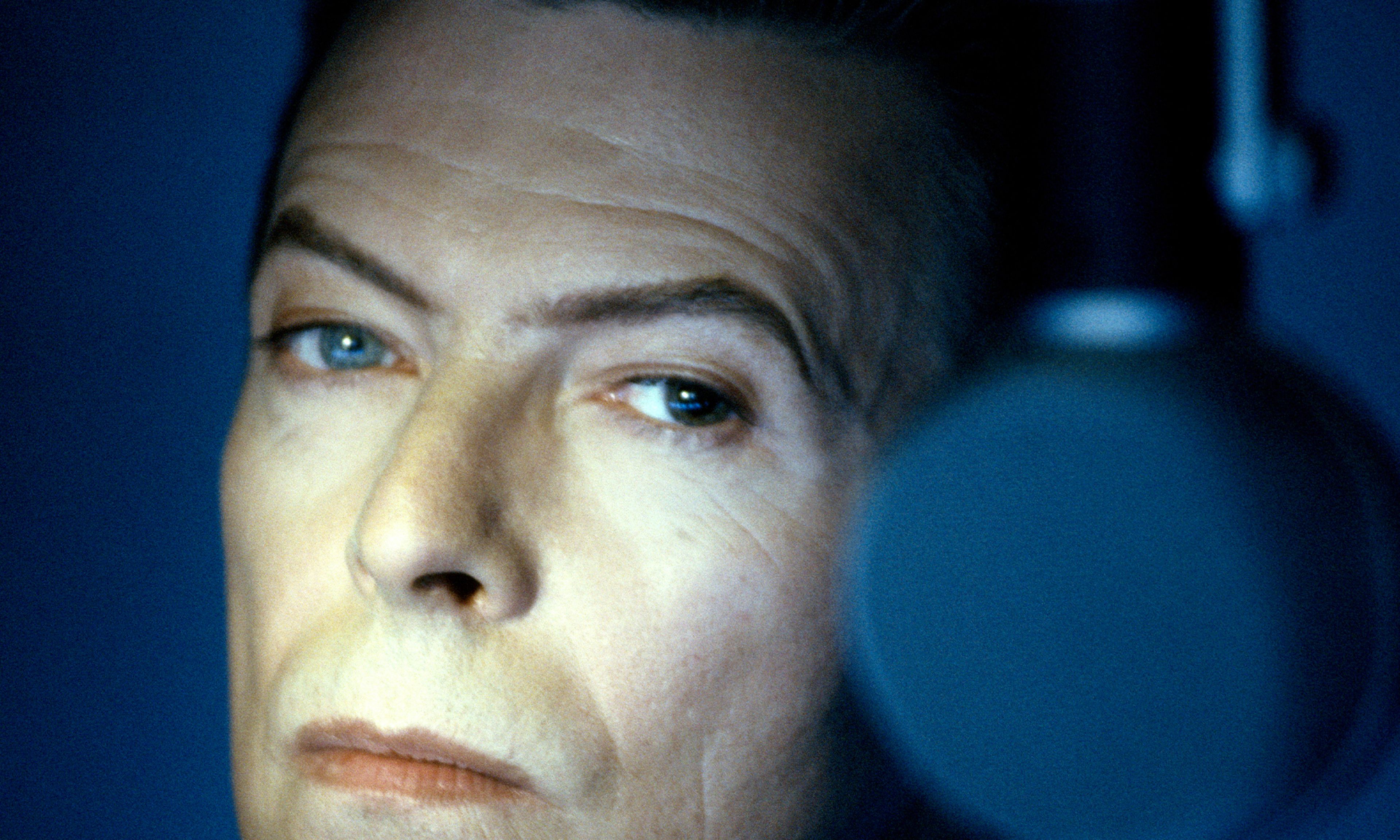
When I awoke on January 11, 2016, to find that David Bowie had died, I was incredulous. Three days before, Bowie had released Blackstar, an album so audaciously experimental that it hardly evoked a man in physical decline. I was consumed by an intense grief whose sting has never truly faded. For many devotees, Bowie was as emotionally significant and influential as a parent or best friend. Alexander Larman shares that attachment. In his new book, Lazarus: The Second Coming of David Bowie, he captures the pain of Bowie’s death with precision and clarity: “I felt adrift.”
Lazarus offers what no other biography of Bowie has attempted: a study of the later years of the artist’s career. The book follows Bowie’s life from the end of the 1980s to its extraordinary conclusion with Blackstar. Even among dedicated Bowiephiles, most of the albums from this period are frequently neglected or outright ridiculed. A common narrative is that from Space Oddity (1969) to Scary Monsters (and Super Creeps) (1980), Bowie produced a transcendent body of work that transformed fashion and popular music. Then, on Let’s Dance (1983), he surrendered to the allure of conventional pop stardom. Afterward, he could only follow trends rather than create them -- at least until he rediscovered himself in the 2010s.
Larman is unsatisfied with this thesis. In the book’s introduction, he notes his “frustration” with other biographers who have failed to “treat Bowie’s latter-day career with the gravitas that it merits.” His goal is to reappraise Bowie’s later work, but his affection isn’t blind. Though Larman’s passion is evident throughout Lazarus, he can be merciless in his criticism.
Lazarus begins in 1991. We find Bowie restlessly touring Europe as a member of Tin Machine, a band he formed in 1988 with Reeves Gabrels and the Sales brothers, Hunt and Tony Fox. The quartet functioned as a democratic unit and played stripped-down rock ’n’ roll. Bowie’s reputation among critics had declined throughout the ’80s, and he hoped that the experiment would reinvigorate him creatively. Instead, Tin Machine came across as a very public midlife crisis. Critics reacted with scorn. “Hot tramp! We loved you so,” proclaimed one especially vituperative review in Melody Maker. “Now sit down, man. You’re a f***ing disgrace.” According to hearsay, Bowie cried when he read the article -- Larman is unable to substantiate that claim. His own perspective on Tin Machine is only somewhat less harsh. He demeans the band’s debut album as “an ugly, hectoring, noise devoid of melody and subtlety” yet recognizes it as a “regrettably vital” first step toward Bowie’s artistic rebirth.
After Tin Machine’s dissolution, Bowie attempted to recover his artistic purpose and commercial appeal. In most instances, he failed, as Larman explores in unsparing detail. On Black Tie White Noise (1993) and Hours (1999), Bowie returned to the introspective songwriting that had defined him at his peak, but both albums flopped on the charts. Outside (1995) and Earthling (1997) experimented with more contemporary sounds, but they failed to attract a new fan base. Larman mordantly observes that Bowie had formed a habit of producing comeback albums. Each new release initially would be praised by critics as “his best since Scary Monsters” before being promptly forgotten once sales figures failed to reflect that optimism.
Yet Lazarus is not a catalogue of mistakes. While Bowie seemed to lose his musical foresight, he remained decades ahead of his contemporaries in his understanding of the internet and its vast commercial potential. His 1996 song “Telling Lies” was the first single by a major artist to be released exclusively as a digital download. In 1998, meanwhile, he launched BowieNet, his own internet service provider. In return for a monthly fee of $19.95, it offered interactive web chats, fan contests, and livestreams.
By 2000, Bowie had been rejuvenated by his marriage to the model Iman and the birth of his daughter, Lexi. That year, he delivered a triumphant headliner performance at Britain’s Glastonbury Festival. In Larman’s estimation, it transformed him from a man out of time to a “peerless performer” in the eyes of a new generation. Over the next four years, Bowie recorded two studio albums -- Heathen (2002) and Reality (2003) -- and toured extensively until he suffered a heart attack onstage. After this incident, he ceased interviews, live performances, and new releases until 2013, when he released The Next Day.
Larman is an agreeable guide through the tempest of Bowie’s life. His prose is compelling, and his wry humor brings an appropriate levity to some of the book’s less cheerful chapters. Along the way, he incorporates interviews with a broad cast of Bowie collaborators. The worth of a new biography of a popular subject is largely defined by the new information it contains. Figures such as bassist Gail Ann Dorsey and pianist Mike Garson provide a surfeit of fresh stories about Bowie that supplement Larman’s rigorous research. We learn, for instance, that Fred Astaire wanted Bowie to portray him on film -- Bowie’s acting career receives careful attention -- and that Bowie’s band adopted a particularly aggressive sound on Reality because they were collectively struggling to quit smoking. Interviewees are candid about some of Bowie’s less pleasant traits: He sometimes abandoned friends and collaborators once their usefulness had expired. But almost all of them affirm that he was, at his core, thoroughly kind and generous.
The final few chapters of Lazarus are uniquely fascinating. Larman cannot explain what motivated Bowie’s sudden return to music, but he chronicles the making of The Next Day in exhaustive detail. The recording of Blackstar, which began as an avant-garde jazz project and evolved into a concept album about Bowie’s impending death after he was diagnosed with liver cancer in 2014, receives only a few pages of analysis. But Larman’s heart-wrenching account of Bowie’s final days is powerful enough to justify the entire book.
Larman critiques each of Bowie’s later albums forcefully. He is never supercilious, but some of his conclusions are questionable. He lauds Heathen for cementing Bowie’s return to “public prominence and regard” after the Glastonbury performance and for inaugurating a new era in his career, but it seems more accurate to say that Bowie had harnessed the power of nostalgia. All but two of the songs he performed at Glastonbury were recorded before the 1990s, and the average set list during his lucrative final tour in 2004 consisted mostly of ’70s and ’80s material. For as much as Larman wants to celebrate Bowie’s later work, Lazarus sometimes does more to affirm the timeless genius of his classic period.
A major exception, however, is Blackstar. Larman is rightly effusive in his praise for Bowie’s final masterwork. Conceived as a rock album performed by jazz musicians, its innovative soundscapes continue to dazzle, while its conceptual layers have lost none of their emotional heft. “More than ever before,” Larman writes, “Bowie was recording for himself and nobody else.” This is the ultimate point of Lazarus: Only Bowie could have turned his physical death into an artistic resurrection.
Hot tramp! We miss you so.

About the Author
Guy Denton is a William F. Buckley Jr. Fellow in Political Journalism.
Featured Tags
Advertisement
Advertisement
Comments