Affirmative Action Is Still Alive and Well. Trump Can Kill It
Written by Stanley Goldfarb and Ian Kingsbury
Many institutions continue to discriminate on the basis of race. Here’s what the president can do to stop the practice once and for all.
Share this story
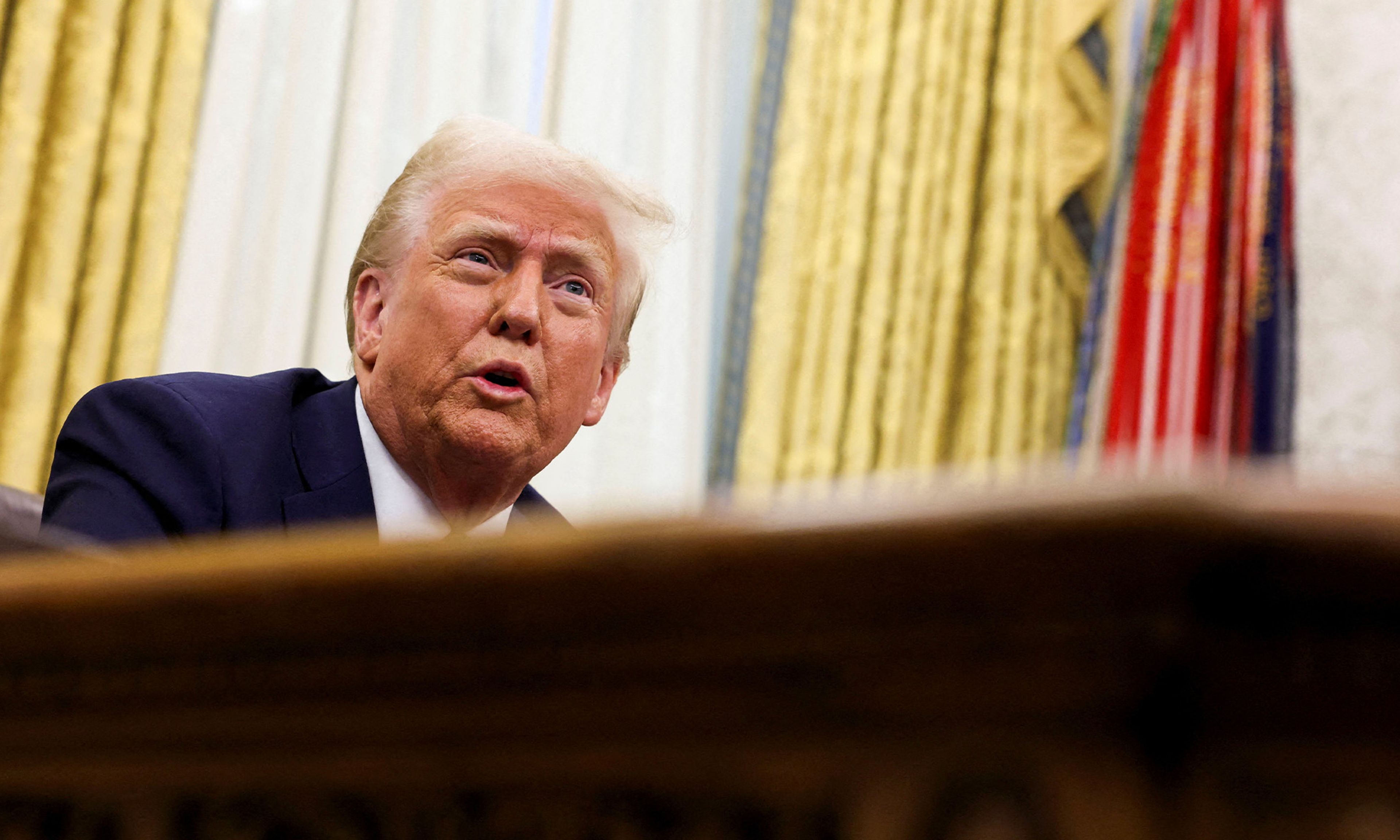
The death of affirmative action has been greatly exaggerated. Donald Trump knows it -- and he’s already moving to end this racial discrimination once and for all.
This is the reality of the executive order that Trump signed on January 21. He ordered the attorney general and secretary of education to ensure compliance with the Supreme Court’s 2023 ban on affirmative action, which is both unconstitutional and illegal. Trump is targeting colleges and universities that receive federal funding, which is essentially all of them.
And wouldn’t you know it: Many institutions are still discriminating by race, most clearly in medical school.
The Association of American Medical Colleges effectively announced this fact on January 9. As the organization that represents every U.S. medical school, it had already promised to help schools get around the ruling -- specifically by “adapt[ing]” their efforts “without compromising” diversity. That seems to be exactly what medical schools have done with the latest medical school class, which saw nearly 52,000 people apply for about 23,000 spots, all of which should be chosen by merit, not race.
The AAMC admitted that discrimination is alive and well by issuing the details of who got admitted to the most recent class at U.S. medical schools. The average Asian and white matriculants respectively had to score in the 89th and 84th percentile on the MCAT test, which the AAMC oversees. The average black matriculant applicant scored in the 68th percentile, while the average Hispanic scored in the 66th percentile. These numbers hardly budged from the 2023–24 academic year, when affirmative action was still allowed.
It’s unreasonable to expect that every new medical student would receive the exact same score, but these wildly disparate numbers indicate continued discriminatory admissions practices. The current class has similar demographics to the class of 2020–21, when affirmative action was allowed, indicating that the emphasis on race hasn’t gone anywhere.
Medical schools aren’t meaningfully changing because they believe in affirmative action. Black and Hispanic applicants are more likely to be admitted despite lower scores because medical schools want more black and Hispanic students, even though lower-scoring students turn out to be less skilled at treating patients. The concomitant truth is that medical schools want fewer Asian and white students, even those whose higher scores indicate a greater chance of giving patients the best care.
This is exactly what the Supreme Court sought to end in 2023. So how are medical schools getting around that ruling? One of us (Ian Kingsbury) heard the answer at an AAMC conference in November. Numerous medical school administrators and legal counsels discussed how they’ve redefined their mission statements to require race conscious admissions without using those exact words.
Practically, this looks like the University of Maryland School of Medicine, which wants students with proven “attention to social justice and diversity.” At the Burnett School of Medicine at Texas Christian University, the school’s “mission and vision” expresses “a fundamental commitment to increase the representation and support of students from diverse communities in medicine.” The University of Vermont’s Larner School of Medicine is more blunt, saying that an applicant’s “contribution to diversity” matters. All three schools have maintained or increased their percentage of black and Hispanic students since the Supreme Court ended affirmative action, as one of us showed in a new report. At medical school after medical school, you can almost hear the deans and lawyers winking, if not laughing.
What’s happening in medical education likely doesn’t end there -- but it shouldn’t happen anywhere. Trump has told the Department of Education and the Department of Justice to work with states to uphold the Supreme Court’s ruling. But he should go a step further and investigate schools for breaking federal civil rights laws.
Violators could be punished by the withdrawal of large portions of federal funding, including student loans. That threat alone would quickly spur schools to focus on merit, the only just factor in deciding which students and schools get the taxpayer’s help. That’s especially true in medicine, where the limited number of medical school spots should go toward students who are most likely to become the best doctors.
But presidential administrations inevitably end, and as soon as four years from now, a pro-racial-discrimination president could reverse such actions. That’s why a new wave of federal lawsuits is needed. Qualified applicants who’ve been denied a spot at medical schools should sue en masse, with ultimate review by the Supreme Court if necessary. Like ending segregation in our public schools, ending affirmative action may become a game of Whac-A-Mole, with the courts having to club racial discrimination until it’s finally and fully dead.
Stanley Goldfarb, a former associate dean at the University of Pennsylvania Perelman School of Medicine, is chairman of Do No Harm, where Ian Kingsbury is director of research.
About the Author
Stanley Goldfarb, a former associate dean at the University of Pennsylvania Perelman School of Medicine, is the chairman of Do No Harm.
About the Author
Ian Kingsbury is the director of research at Do No Harm, a health-care-advocacy organization.
Featured Tags
Advertisement
Advertisement
Comments