A Temporary Respite for Free Speech in Britain
Written by John Gustavsson
Amid political tumult in the U.K., Hamit Coskun’s victory is likely to be an exception rather than the rule.
Share this story
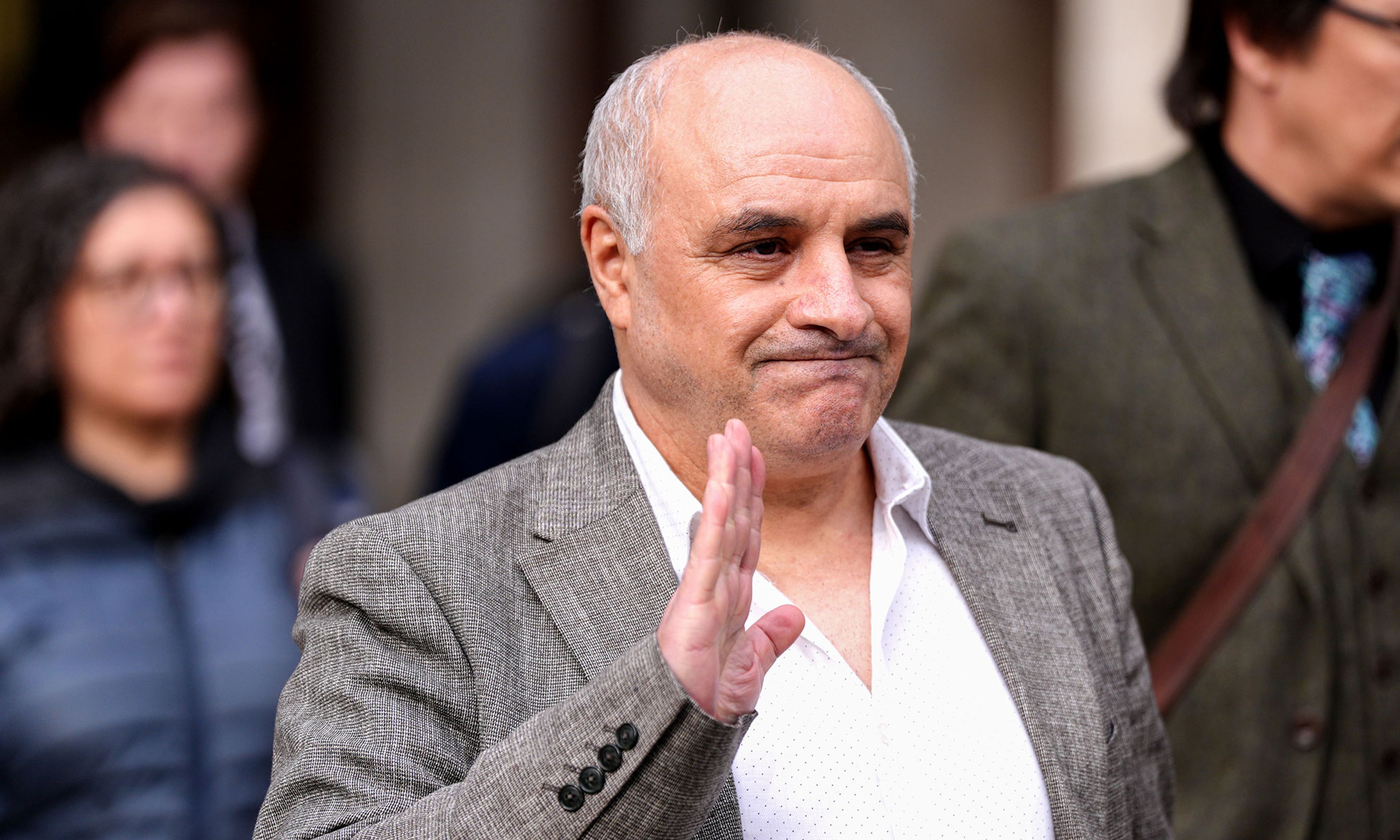
In February of last year, a 50-year-old Kurdish-Armenian man named Hamit Coskun burned a Koran outside the Turkish consulate in London. In June, a court convicted him of a “religiously aggravated public order offense,” but this conviction was subsequently overturned in October. Last week, the High Court dismissed a Crown Prosecution Service (CPS) appeal of this overturning, effectively putting an end to the process, as the case has not been referred to the supreme court.
Coskun’s case represents a rare victory for free speech in Britain. Sadly, it is likely to be short-lived.
Hamit Coskun is not the first person to have suffered legal trials due to burning the Koran. As early as 2010, a British schoolgirl was arrested for burning several pages out of a Koran on a video uploaded to Facebook. In Denmark, a man was convicted back in 2017 after filming himself burning a Koran, though outrage over this conviction led to the repeal of Danish blasphemy laws. In Sweden, Koran burner Salwan Momika was convicted of agitation against an ethnic group. Sadly, Momika was murdered while livestreaming on TikTok from his apartment the day before the conviction was to be announced (the suspect remains at large).
In the Coskun case, CPS bizarrely argued that the fact that Coskun was violently attacked by a man carrying a blade constituted proof that Coskun’s actions were offensive, which the judge agreed with. Had the conviction stood, a dangerous precedent would have been established.
Unfortunately, the threat to free expression is far from over. U.K. Prime Minister Keir Starmer is pushing to abolish jury trials for all but the most serious crimes, something that statistics indicate would increase the conviction rate in free speech cases.
Additionally, Britain’s Muslim minority is now showing its political teeth. Tahir Ali, a Labour MP, has argued in favor of legislation explicitly banning the desecration of religious texts. The Muslim Council of Britain, while condemning those who would take matters into their own hands, nevertheless argues that burning a Koran is akin to inciting hatred against Muslims. Sadly, recent political developments make it more likely that this view is gaining influence.
To understand why, one must first understand that, in the midst of these free speech developments, the U.K. faces a turbulent electoral situation. Labour is a party in crisis. Less than two years after winning a historic landslide victory, the party is now routinely polling in third, behind both Nigel Farage’s Reform U.K. and the Tories, who are looking increasingly reinvigorated under leader Kemi Badenoch.
Yet neither of these parties is giving Labour its biggest headache. That, instead, would be the Green Party. Traditionally a minor party, the Greens won just four seats in the House of Commons in 2024 (up from the one seat it had held since 2010). Now, however, the Greens are polling within the margin of error of Labour.
The threat became very real in last week’s by-election in the Greater Manchester constituency of Gorton and Denton. While polls had indicated a three-way tie, in the end, it was not close, with Green Party candidate Hannah Spencer winning 41 percent of the vote, to Reform’s 29 percent and Labour’s 25 percent. In a poll released days after this by-election, the Green Party surged to second place, behind only Reform.
For the past year, Labour has attempted to win back Reform voters by getting (modestly) tougher on immigration and border control. Polling-wise, they have nothing to show for it.
After Gorton and Denton, a new consensus is forming: Treat Reform voters as a lost cause, and focus on winning back Green Party voters, while hoping that the right-wing vote remains split.
To understand how this relates to the Coskun case, and freedom of speech in general, one must understand that the Green Party has, by and large, grown by winning over Muslim and other immigrant voters (and “woke” white voters). Gorton and Denton is one of many traditionally white working-class constituencies that in recent decades have seen its Muslim population surge, with Muslims now making up nearly 30 percent of the population. In many ways, the recent by-election turned into a showdown between the populist right (Reform) and the populist left (Green Party), which the latter won.
During the by-election campaign, the Green Party went as far as to release ads and leaflets in Urdu (a Pakistani language) and Bangla, which included pictures of Keir Starmer shaking hands with Indian Prime Minister Narendra Modi, a hated figure among both Pakistani and Bengali migrants. Voters were urged to punish Labour for Gaza, a strange position given that Starmer’s government last September recognized Palestine. Even in English, the Green Party made little secret of which voters it was targeting, running on a slogan of “Stop Islamophobia. Stop Reform.”
The consensus among the political class is that Starmer’s Labour Party and, therefore, his premiership, are running on fumes, with the local elections in May set to deliver the final blow that will either force him to resign or, should he refuse, trigger a coup.
Among the candidates most likely to replace Starmer, all but Home Secretary Shabana Mahmood — the architect of Labour’s tougher stance on immigration — are likely to move the party in the direction of recapturing Green Muslim voters, rather than attempting to win back the white working-class voters lost to Reform. With Mahmood’s policies and rhetoric being blamed for the party’s loss in Gorton and Denton, her prospects of succeeding Starmer have dimmed.
While it is easy to write off a by-election in a poor, Muslim-heavy constituency as a fluke, out of the 650 House of Commons constituencies, there are 22 that have a Muslim population share as high or higher as Gorton and Denton. Another 42 constituencies have Muslim shares over 20 percent, and in an additional 78 constituencies, Muslims make up between 10 and 20 percent. For contrast, the white working-class dominated “Red Wall” — Britain’s “Rust Belt” — is made up of 63 constituencies.
For geopolitical reasons, neither Starmer nor whoever succeeds him can go as far as Muslim voters want to “punish” Israel over its alleged crimes in Gaza. And for fiscal reasons, it cannot undo the cuts in welfare benefits that have particularly upset Muslim voters (who are over-represented among recipients). Facing this dilemma, the Labour Party is all but certain to resort to increased censorship to court these voters. Last year, the government put together a working group to create a formal definition of “anti-Muslim hatred,” a move that has been criticized by free speech advocates.
As Labour looks set to pivot left to court Green Party voters, we should expect more concessions for blasphemy protections. It is entirely possible that Coskun’s victory, rather than a turning point, may turn out to be the last gasp for free speech in Britain before politics bows permanently to identity and intolerance.
About the Author
John Gustavsson is a writer from Sweden and holds a doctorate in economics. He is a former adviser to the Sweden Democrats in the European Parliament.
Featured Tags
Advertisement
Advertisement
Comments