A Day in Malibu: Art Among Sun, Sand, Surf, and Ashes
Written by Brian T. Allen
A visit to the Getty Villa, the tough road to a happy afterlife, and a colorful here-and-now at Malibu’s tile museum
Share this story
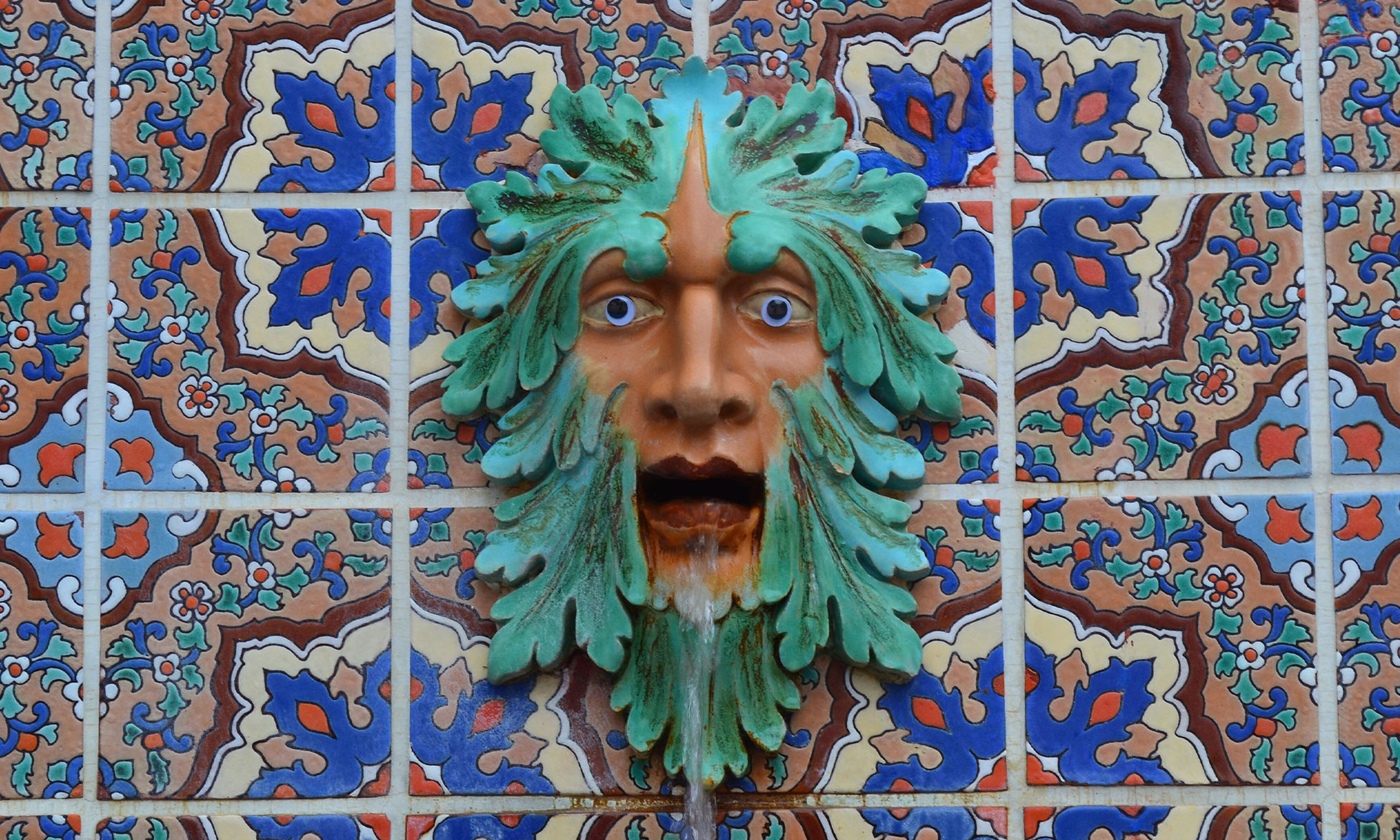
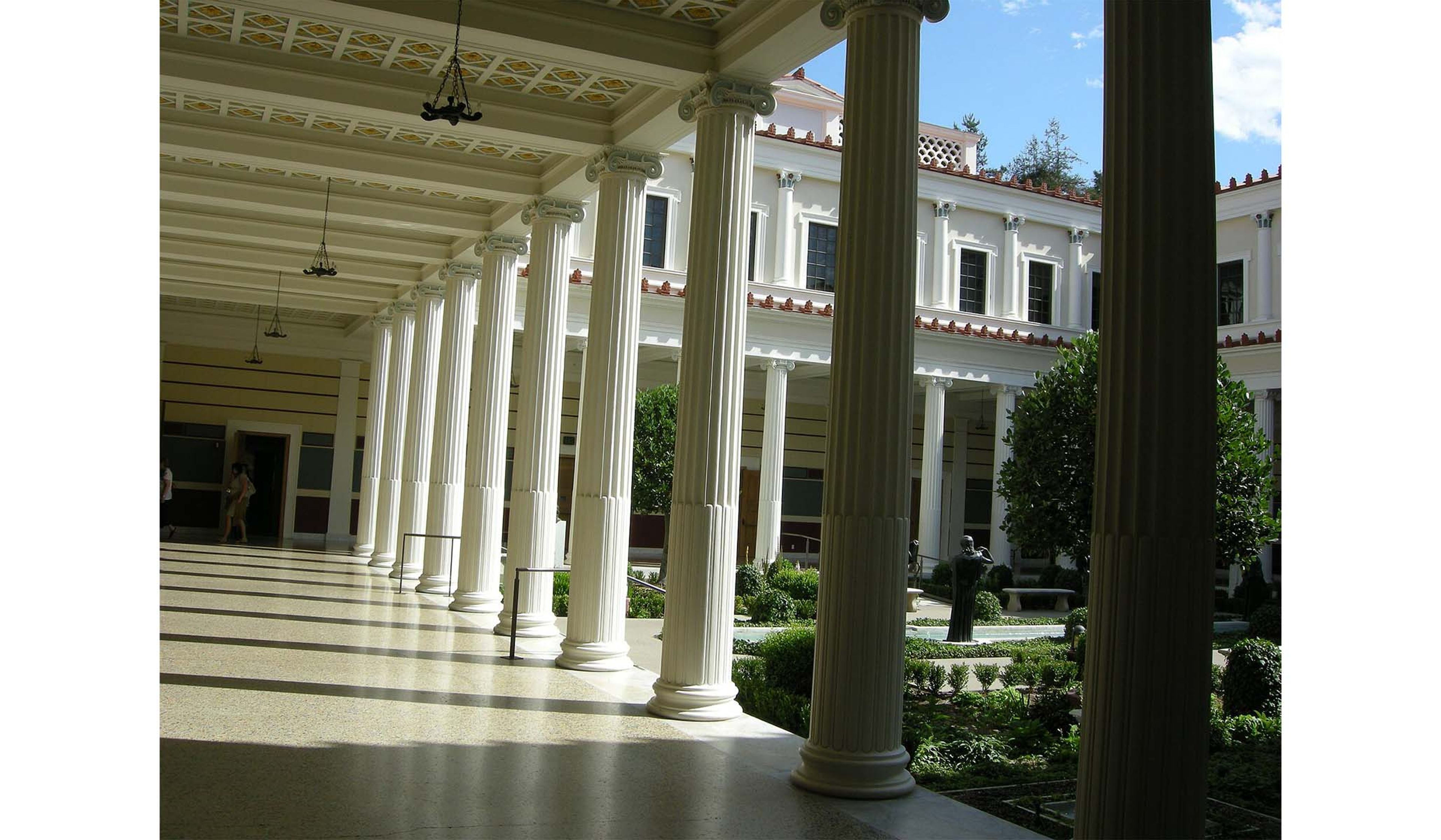
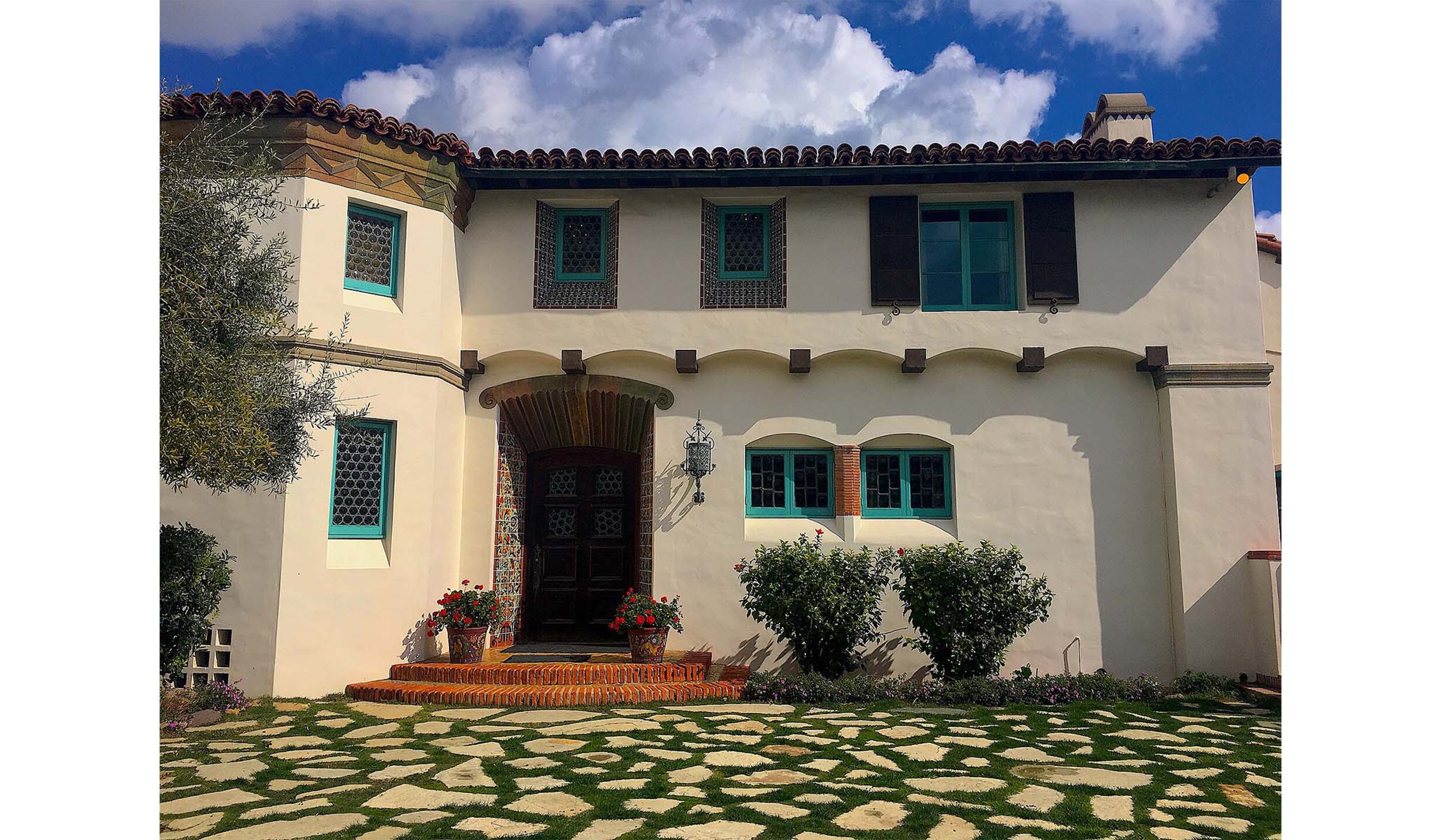
After visiting the new Los Angeles County Museum of Art, I went to two villas in Malibu, not far from each other and about as different as you could imagine. There’s the Getty Villa, the Getty’s antiquities museum built by J. Paul Getty as a full-scale reproduction of the Villa of Papyri, a deluxe Roman home buried by volcanic ash in a.d. 79 when Mount Vesuvius blew its top. The other, infinitely more modest but more endearing and picturesque, is the Adamson House, a house museum, home of the tiny Malibu Lagoon Museum, and America’s Alhambra, as it’s called for its exquisite and prolific tile. The house is a hidden treasure. The Getty Villa is stately and tops a steep hill. The Adamson House is on Malibu’s Surfrider Beach, one of the world’s best surfing beaches. The house is Mission Revival, and the tile covering many of the walls and floors is Art Deco.
The last time I visited the Adamson House was in 2022 right after California allowed museums to open in the wake of the Chinese coronavirus mass hysteria, vacation from reality, and power-abuse orgy. Its website said it was open that day, but the two-person staff hadn’t gotten the memo, so no tour, and visitors can walk through the impressive, tile-bedecked house only with a docent. I was left to wander the grounds -- the two tiled fountains, the exterior, and the sweeping beach I saw were hors d’oeuvres for this visit. Things seem less podunk these days. A park ranger greets visitors, and our volunteer docent was decent. Docents usually compose their own tours and get a wide berth.
Our tour group assembled in the one-room Malibu Lagoon Museum. Malibu’s gringo history began on February 22, 1776, when 240 settlers, mostly Spanish, and a thousand livestock camped by Malibu Creek, liked the sun and those perfect, infinitely peeling right-hand point breaks, and decided Malibu was the place to be. Titles were a funny thing in those days, since only the king of Spain could own California land, but a title could be granted for its use. Colonial Spain became Mexico in 1822, and California became our 31st state in 1850, a bit after the Gold Rush showed that California had more to offer than señoritas and pretty beaches. In 1851, Congress established the Board of Commissioners to Ascertain and Settle Private Land Claims to determine who legally owned what. In 1857, Matthew Keller, an Irish-born rancher and vintner, bought the 13,000-acre Ranch Topanga Malibu Sequit for ten cents an acre, knowing that the title might be defective, but he dreamt of Gidget.
In 1872, the commission chased the clouds away, giving Keller free and clear title. He’s often called the father of California horticulture for bringing tasty oranges and wine grapes. In 1892, Keller’s son sold the ranch for $10 an acre to Frederick Rindge, a Cambridge-born, Harvard-educated man in search of a sunny clime and a place where his inherited fortune could grow.
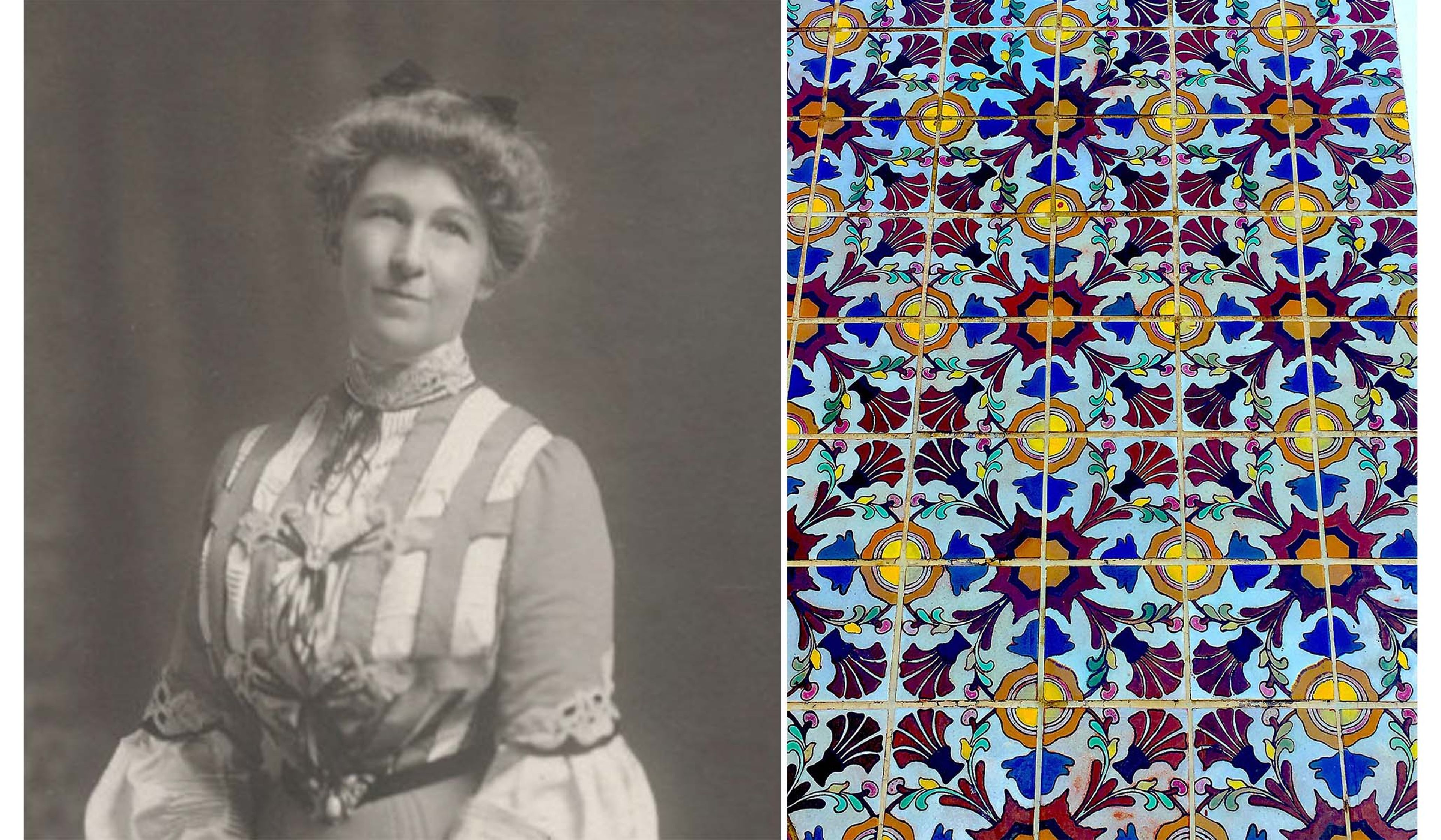
He married the mostly unstoppable Rhoda Knight (1864–1941), called May but also the Queen of Malibu. The first woman to become president of a railroad, she also founded the Malibu Movie Colony -- a private retreat for Hollywood elites -- and was the entrepreneur behind Malibu Potteries. She tried to squelch the Pacific Coast Highway and to find oil on the ranch but, failing these, found dark red and buff clay instead and, in 1926, opened Malibu Potteries. The factory closed in 1932, owing to damage from a kiln fire, but during its years it provided rich Angelenos with splendid tile in cobalt blue, dazzling mint green, orange, scarlet, turquoise, yellow gold, azure, and many more. At its peak, the factory made 30,000 square feet of tile a month. The Mission Revival and, to a lesser extent, Arts & Crafts home-building booms in the 1920s kept the company busy, as did decorators wanting Hispano-Moresque, Aztec, and Egyptian patterns.
The 5,000-square-foot Adamson House was a gift from May to her daughter, also called Rhoda (1893–1962) -- every generation has a Rhoda -- and her husband, Merritt Adamson (1888–1949). The Adamsons owned and ran Adohr Dairy and Creamery Company -- that’s Rhoda spelled backward -- and supplied Los Angeles County homes with high-quality milk from cows on the ranch. The company’s Adohr-able Baby contest, once won by Shirley Temple, was an Adamson PR ploy. May supplied the house’s tile, too, and the 13 acres of land steps from Windsurfer Beach.
May and the Adamsons never went to Spain, but they loved Andalusia. A Plateresque Revival cornice decorates the garage by the house, now the place to buy tickets for $7 and the home of the Malibu Lagoon Museum. The high points of the museum are Rindge lore, a saddle, the Rindge triangle-shaped cattle brands, Chumash tools, and a painting of Chumash natives by the lagoon. Surely more could be done. Goodness, Clara Bow, Gary Cooper, Gloria Swanson, Barbara Stanwyck, John Gilbert, and studio moguls lived in the gated movie colony. The Charlie’s Angels house is in Malibu.
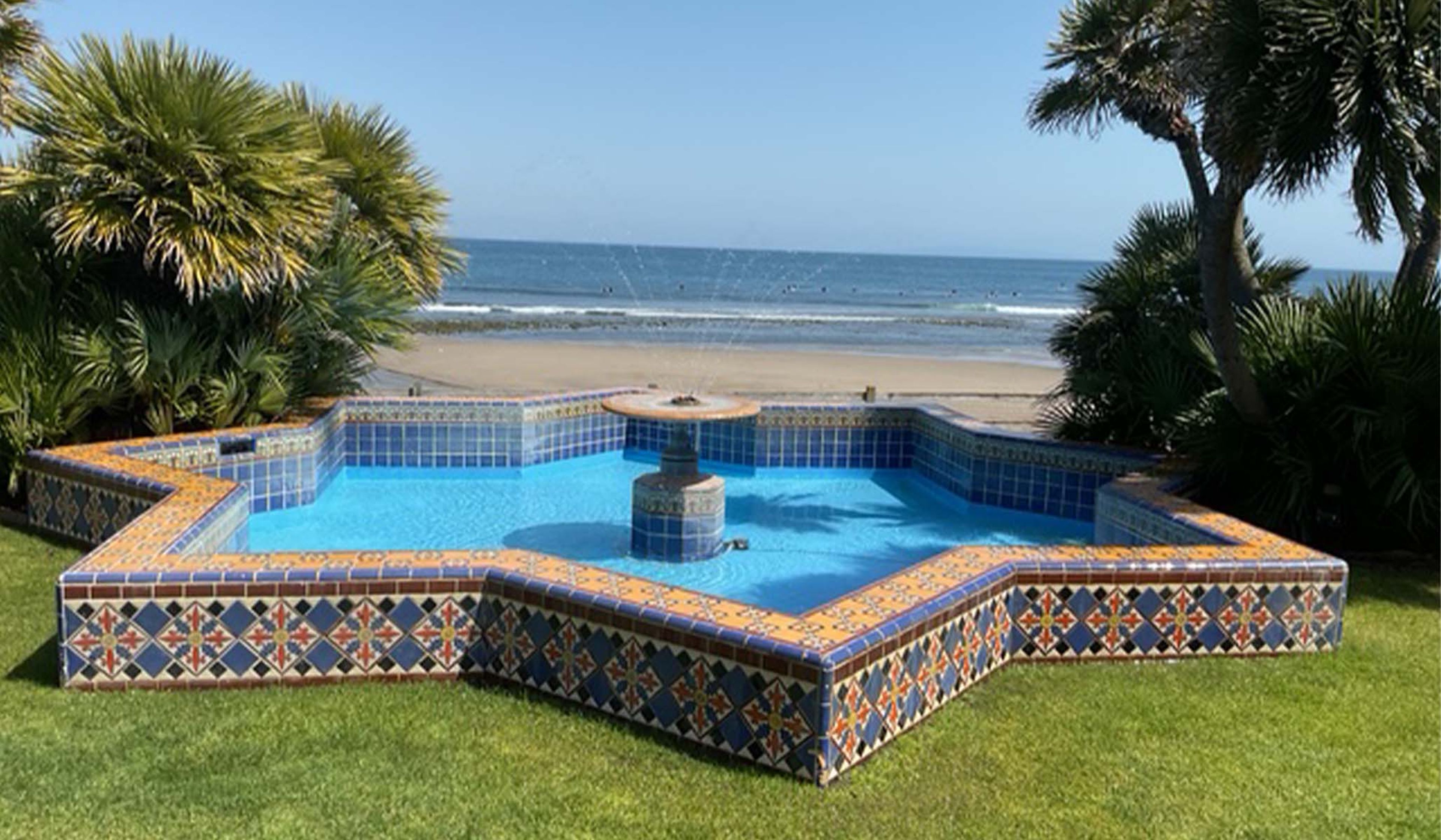
The docent was very good in describing the types of tile in the house. Cuerda seca, or dry-line tile, is a Moorish Andalusian technique that keeps color glazes from running into one another during the firing process. Patterns include the Peacock, Persian Rug, and Moorish Star, but there are many more. A Persian Rug floor pattern has around 675 tiles, including tile fringes, and fills a hallway leading to the parlor. Most of the ceilings are painted blue -- a color that recalls the sky and was thought to thwart spooks. Fireplaces also have a triangle motif -- remember the Rindge-ranch cattle brand -- and chairs are covered in hand-tooled leather. Bathrooms are over-the-top in the tile department. The kitchen has an early General Electric dishwater, used for a while in the 1920s until its excess agitation put too many dishes and glasses in extremis.
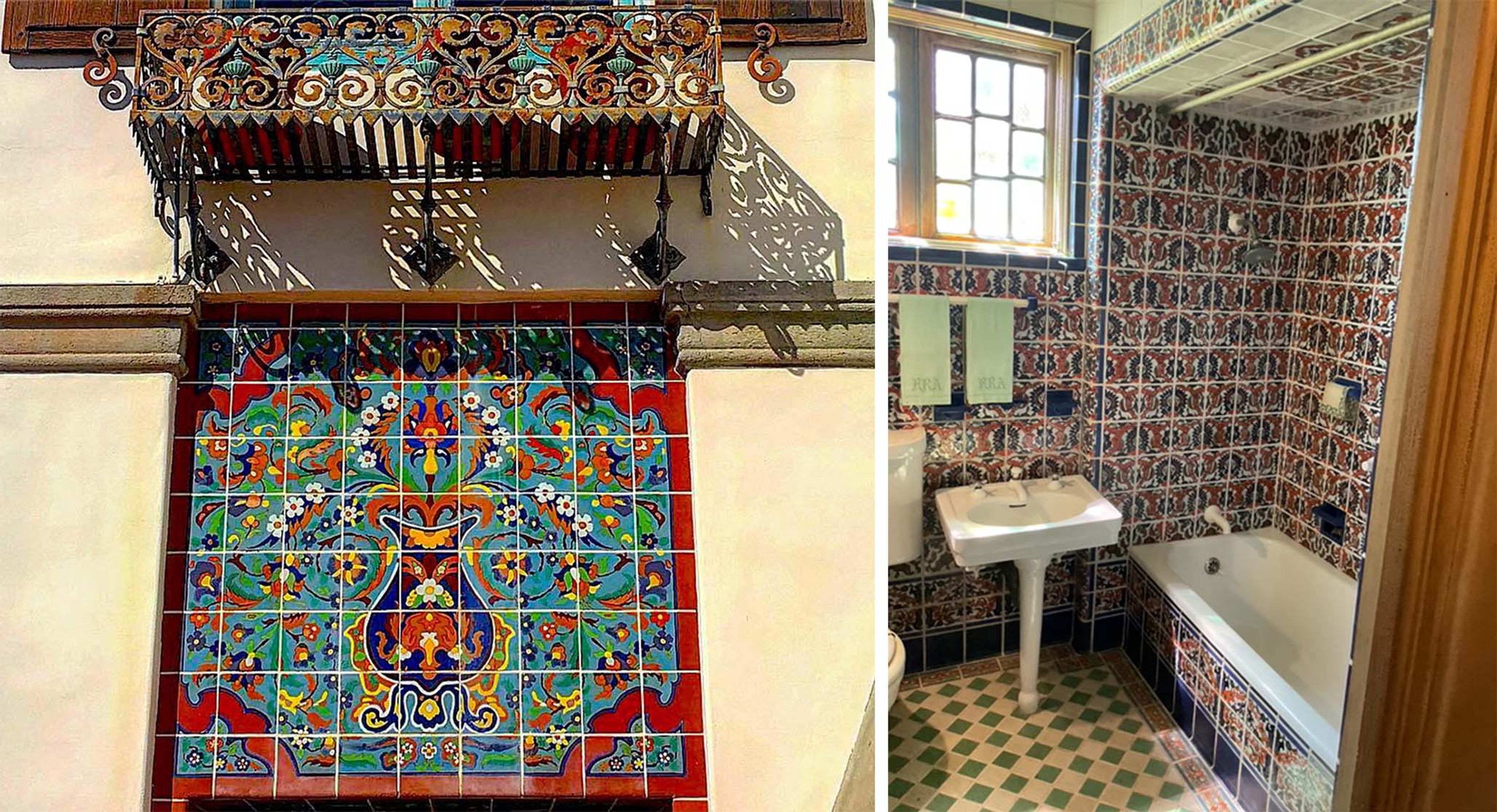
The patio, every fireplace hearth, and every threshold is decorated with tile shards arranged haphazardly, owing to a Rindge family superstition that straight lines invite evil spirits while jagged lines repel them. Windows are inset for more light, with bright, fully saturated colors, especially cobalt blue and scarlet. It took a touch of uranium to get the colors right. No night-lights needed here!
The Rindge family protected their piece of paradise as much as humanly possible, building a wall so it couldn’t be seen from the Pacific Coast Highway after May failed to block the highway’s construction. They managed to block Union Pacific from building a railroad through Malibu from Santa Monica to Santa Barbara. Still, the place faced plenty of near-death experiences. The State of California bought the house and land in 1966, planning to demolish it for a parking lot. After a long fight, it failed.
The Adamson House survived the Old Topanga Fire of 1993, but its closest brush with doom-by-incineration was the 1931 industrial fire, when most of Malibu Potteries burned. May Rindge hoped to rebuild but the deepening Great Depression laid local building low. In last year’s fire in Pacific Palisades, crews were on the spot slathering the place with fire-protectant gel, so the building and landmark fountains were saved. Nearby houses and businesses weren’t so lucky. Malibu was very hard hit and very slow to recover, owing in part to fanatical building codes purporting to keep it rural. Malibu, home to millionaires and billionaires, ain’t rural. Arlington in Vermont is rural. No one in Malibu is a mouth breather, wears twill for a belt, or shoots his pumpkins the day after Halloween.
The Adamson House is well worth a visit, though hours are limited, and, we’re told, if a docent doesn’t show, you’re outta luck.

Since the 1890s, Malibu has had a severe wildfire roughly twice a decade, so it’s a flammable place by nature. A few miles down the road is the Getty Villa, which had a near-death experience -- the only one like it was the state of the New Orleans Museum of Art after the Hurricane Katrina flood in 2005. Roughly 1,400 trees on the Getty Villa’s 65-acre property burned, since it was in the fire’s direct path. Its irrigation pipes melted. The fire was on all four sides of the museum, advancing to about 350 feet -- the length of a football field -- from the building. Both campuses of the Getty -- the other is the Getty Center in Brentwood -- have their own reservoirs. They’re filled, not empty like the one meant to serve Pacific Palisades, and at both campuses, exterior cameras are ubiquitous. In the Getty’s crisis center in Brentwood, fire on the grounds could be spotted on camera and crews onsite dispatched to put it out. Double-walled galleries were essential. Interior dampers were turned off as soon as the staff smelled smoke. The Getty -- unlike state, county, and city departments -- doesn’t, I’m told, use diversity quotas to fill public-safety jobs with incompetents.
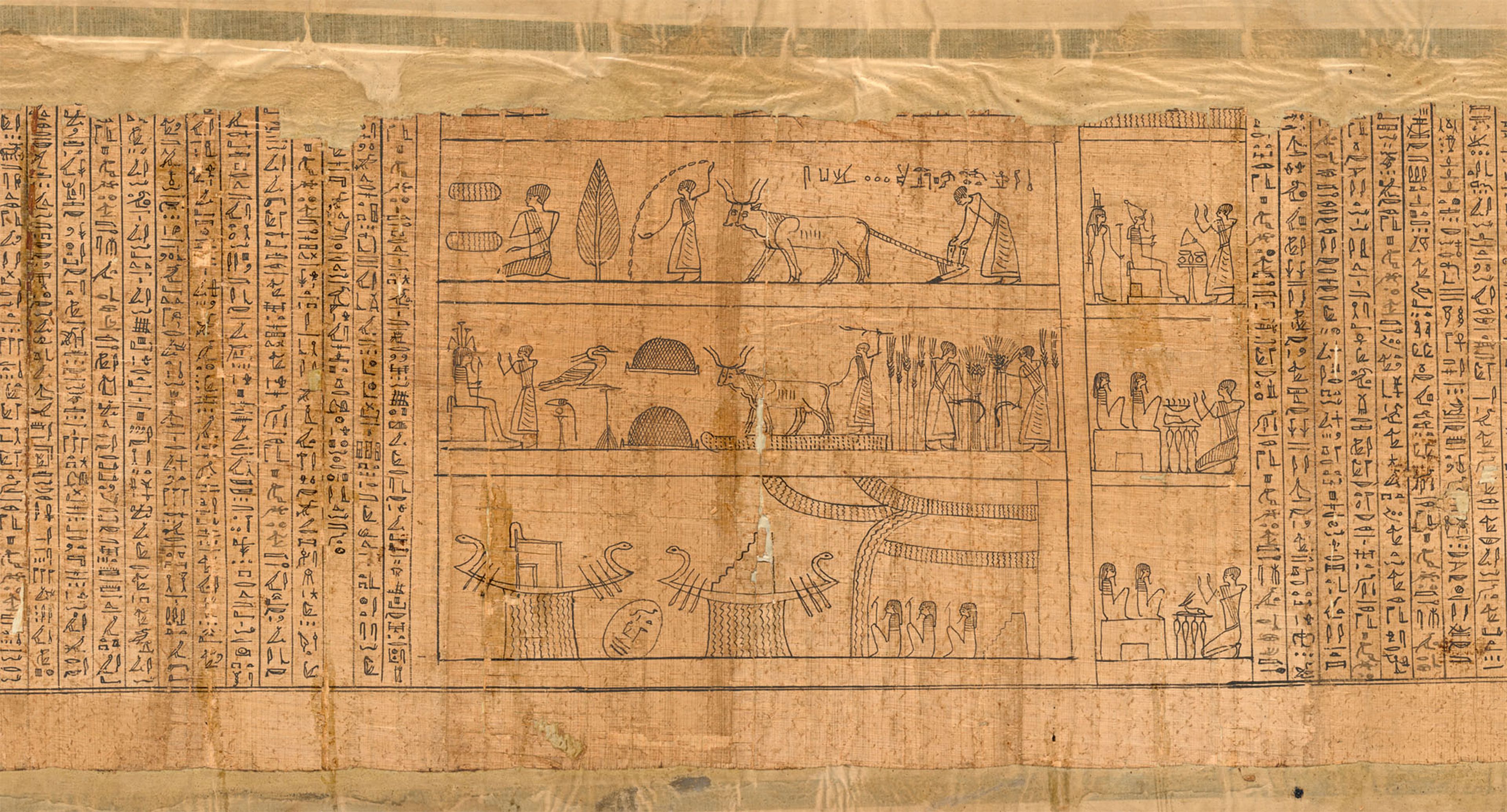
The season at both Gettys is a bit of a dud, with an Old Master drawings show pulled from the permanent collection and an exhibition on black civil rights photography that the Getty took from the National Gallery. The Getty doesn’t get an A for initiative and originality. The Villa is doing a show on The Egyptian Book of the Dead, religious writings on scrolls and spells appearing on funeral objects meant to guide those who were no more to a happy, blessed afterlife. The objects are all from the Getty collection and cover the deaths and burials of eight people from 1500 b.c. to 50 b.c. It’s a small exhibition that’s already been shown once before, in 2023. It’s back by popular demand, we’re told, but I wonder. The Getty was closed for a year and a half during the Covid mass hysteria. This is bound to have affected work habits. It’s not a big exhibition, it has no catalogue, and, odd to say, it’s at the end of a long hallway empty of art with no signage.
The exhibition teaches us first and foremost that “what happens when we die” is a question as old as human life. Papyrus scrolls, a guide for how to be dead, went into tombs with the mummy. Many are written in the first person, anticipating the dead’s communication with Osiris, the god of the afterlife. I was surprised at how mod some of the advice is. “All things are possible . . . who you are is governed by who you think you are” is one of my favorites. There’s a negative confession of 42 sins that might bar you from the afterlife of fun and frolic: “I have not stolen,” “I have not uttered lies,” “I have not been an eavesdropper,” “I have not pried into the affairs of others,” . . . Boy, these death gods can be picky. And the road to the afterlife is filled with endurance tests and booby traps.
One scroll depicts a scale, on one side the dead’s heart, on the other a white feather. A heavy heart -- heavy with guilt -- would unhappily tip the balance and off he’d go to a forever death definitely not cavorting with the gods. It’s harder to get into this gated community than the Malibu Movie Colony.

About the Author
Brian T. Allen is National Review’s art critic.
Advertisement
Advertisement
Comments