A Bad Order for Rail
Written by Michael Toth
The Railway Safety Act would drag the industry backward by prioritizing unions over technology.
Share this story
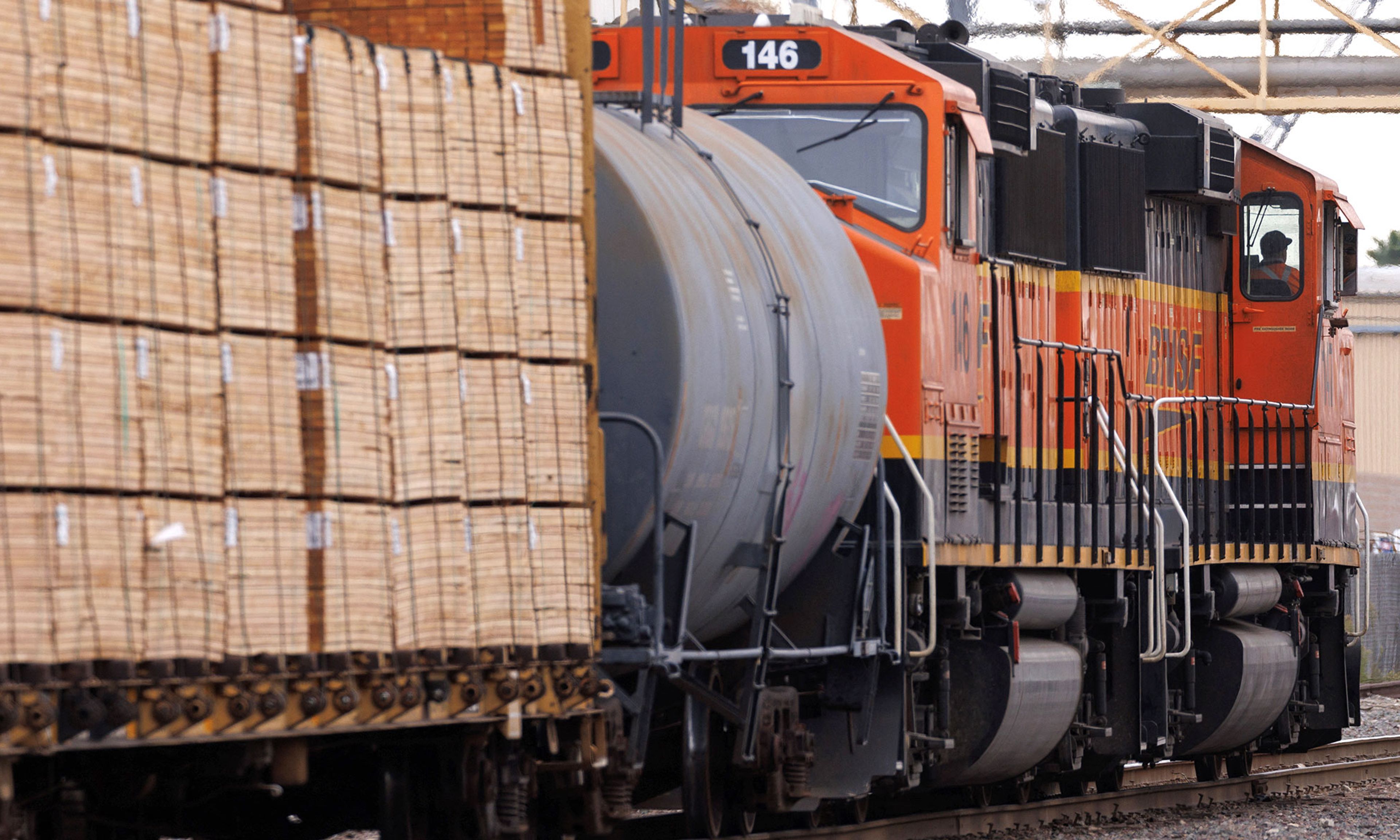
A bipartisan group of senators recently reintroduced the Railway Safety Act (RSA), a union-backed measure once championed by the Biden administration. Stalled by congressional Republicans when it was introduced in 2023, the bill is now attracting some support within the party. Earlier this month, the Department of Transportation under President Trump called on Congress to pass the RSA.
If it does, consumers should brace for higher prices on all kinds of merchandise. Behind the bill’s safety branding lies a Big Labor wish list that would increase supply-chain costs while doing little to reduce rail accidents -- which have already been falling for years, largely thanks to technology. It’s no accident that the RSA has drawn criticism from a long list of free market groups.
First proposed in the aftermath of the 2023 East Palestine derailment, the bill is a textbook example of what’s now referred to as Rahm’s Rule, after President Obama’s chief of staff, Rahm Emanuel: Never let a crisis go to waste. Touted as a common-sense safety fix, the RSA wouldn’t have stopped the East Palestine derailment. It can’t be counted on to prevent the next disaster, either. Consider the bill’s signature mandate that major freight carriers operate with at least a two-person crew. Crew size wasn’t the problem in East Palestine. The train that derailed had three crew members onboard.
Multiple-member crews were common in the rail industry before the 1990s. But improved technology has allowed freight companies to operate more safely with smaller crews. According to industry data, rail accidents have dropped 30 percent since 2000, and employee injuries are down more than 40 percent. Even the regulation-addicted Europe uses single-member crews.
Rail unions have nevertheless been pushing for larger crews for years, despite a lack of a proven link to increased safety. As Obama’s Federal Railroad Administration acknowledged in 2016, there is no “reliable or conclusive statistical data” showing one-person crews are less safe than multiple-person crews.
It is more likely that the RSA’s staffing requirement would deliver a win for labor unions at the expense of public safety. By locking in labor costs as unavoidable, crew mandates will discourage future investment in automation, which has been responsible for the steady improvement in rail safety.
The RSA’s rigid inspection rules are another sop to organized labor. The bill would require railroad mechanics to inspect every railcar on trains carrying hazardous materials, and bar management from setting time limits on those inspections. This provision would enable unionized inspectors to slow-walk the process and delay departures, leaving trains idle while workers are paid to sit around. Rail delays can run an estimated $2,900 per hour, largely due to added labor costs.
Unlimited time also doesn’t help inspectors detect mechanical problems that are not visible in the first place. These include the overheated wheel bearing that caused the East Palestine derailment. The federal government’s investigation of that accident found insufficient evidence that a manual safety check would have spotted any problems with the bearing.
Elsewhere, the RSA demonstrates why one-size-fits-all mandates from Washington don’t work, as they stifle the innovation that drives economic dynamism. Case in point is the bill’s mandate to install “hotbox” detectors — trackside devices that use infrared sensors to monitor bearings and wheels for overheating — every 15 miles. This provision would not have made a difference in East Palestine, either, since detectors on the Norfolk Southern track were already spaced ten to 20 miles apart. The mandate would cost an estimated $1.1–$2.2 billion, but railroads could better spend that money on advanced safety systems that use optical imaging, artificial intelligence, and thermal sensing to detect problems more accurately.
Over the past few decades, railroad prices have fallen because the federal government got out of the way. The Staggers Act of 1980 deregulated freight rail, sparking competition that pushed America’s railroads to invest over $1 trillion (in today’s dollars) in infrastructure and maintenance. The payoff: Adjusted for inflation, average rail rates dropped by more than 40 percent from 1981 to 2023.
By making rail more expensive, the RSA is likely to make roads more dangerous for all of us. Its added costs would push more freight onto trucks — rail’s greatest competitor — leading to more highway congestion, pollutive emissions, road damage, and traffic accidents. That could make Americans less safe overall: Roughly twice as many people suffered injuries in hazardous-materials accidents on highways as on rail from 1990 to 2021.
According to news reports, rail-union allies in the White House are pushing lawmakers to cram the RSA’s key provisions into the surface transportation reauthorization bill, latching the long-stalled proposal onto must-pass legislation. That sets the stage for a confrontation with Representative Sam Graves (R., Mo.), the powerful chair of the House Transportation and Infrastructure Committee, and Senate Commerce Committee chair Ted Cruz (R., Texas).
Both Graves and Cruz have opposed the RSA in the past, and the committees they run have jurisdiction over federal transportation programs. Graves has described the transportation reauthorization bill as a generational opportunity to delegate authority to the states, deliver long-overdue permitting reform, and shore up highway funding by ensuring EV drivers pay their fair share.
The RSA threatens to derail these much-needed policies by saddling the transportation bill with outdated rail mandates that undermine affordability and economic growth for no real safety benefit. It’s time to hit the brakes.

About the Author
Michael Toth is the director of research at the Civitas Institute at the University of Texas, Austin.
Featured Tags
Advertisement
Advertisement
Comments